

The coronation at the heart of the celebration
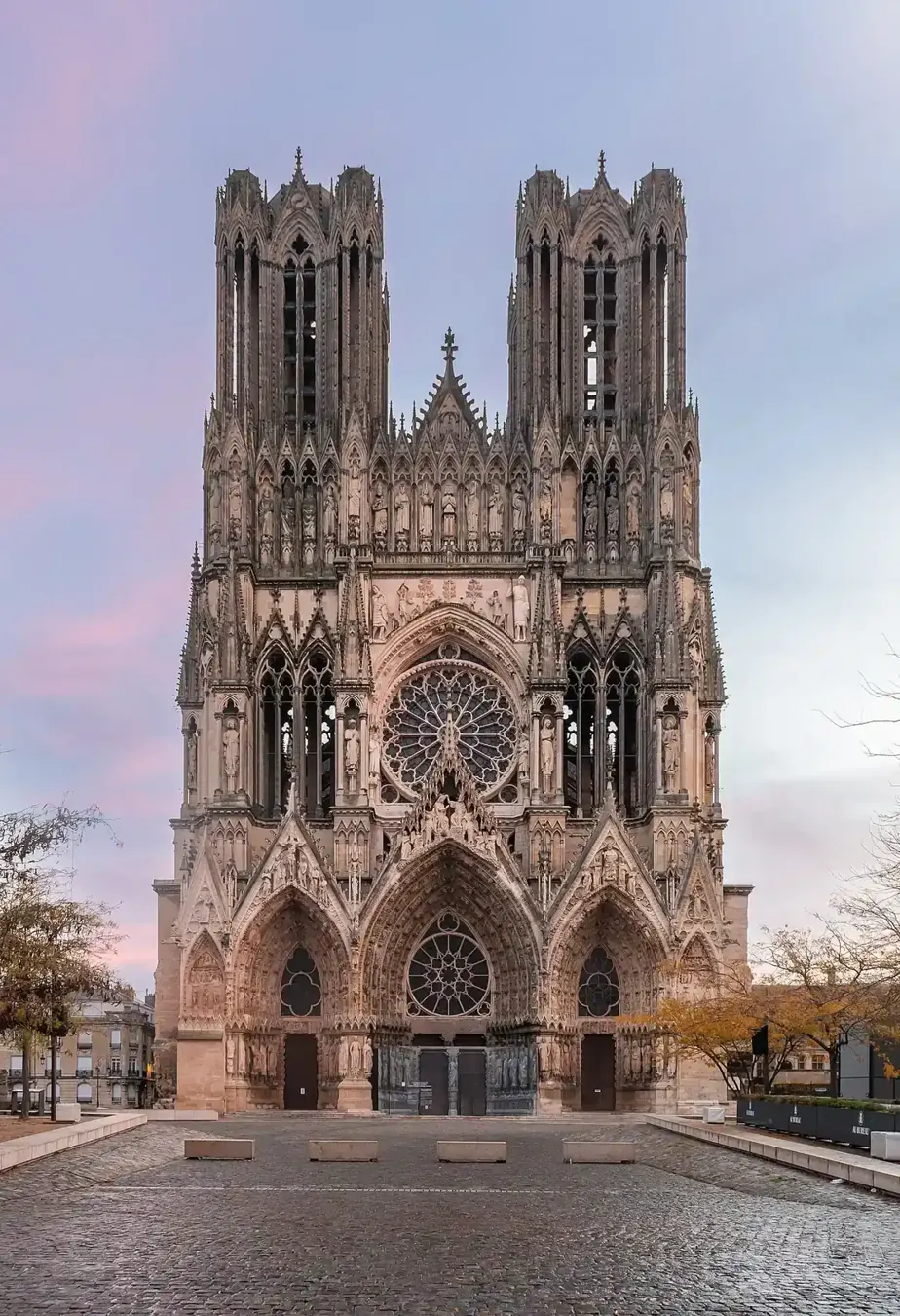
On 17 July 1429, Charles VII was crowned in Reims Cathedral with Joan of Arc present. Archbishop Regnault de Chartres performed the ceremony. This is the episode commemorated by Reims’s Fêtes Johanniques, the historical celebration that has developed into Reims, l’Épopée Légendaire. The coronation date belongs to the event’s subject, not the founding date of the modern festival. Keeping those two histories separate makes the procession, royal costumes and cathedral setting much easier to understand.
The journey to Reims followed Joan’s part in the relief of Orléans and the Loire campaign. Charles VII’s legitimacy was contested after the Treaty of Troyes of 1420 had excluded him from succession in favour of the English royal line. Reaching the traditional coronation city gave his claim a powerful religious and political setting. Image’Est’s historical account identifies the July ceremony as the particular event remembered in Reims, distinguishing it from celebrations centred on Orléans’s liberation.
The coronation tradition was already centuries old in 1429. Louis the Pious had been crowned at Reims in 816; the city’s reputation also drew on the baptism of Clovis by Bishop Rémi. The present Gothic cathedral was begun in 1211 after fire destroyed its predecessor in 1210. Joan and Charles therefore entered an established royal church, not a building created to commemorate them. Today’s festival draws its theatrical power from that meeting between a particular young woman’s journey and a much older ceremonial place.
A statue turns the story into a permanent landmark
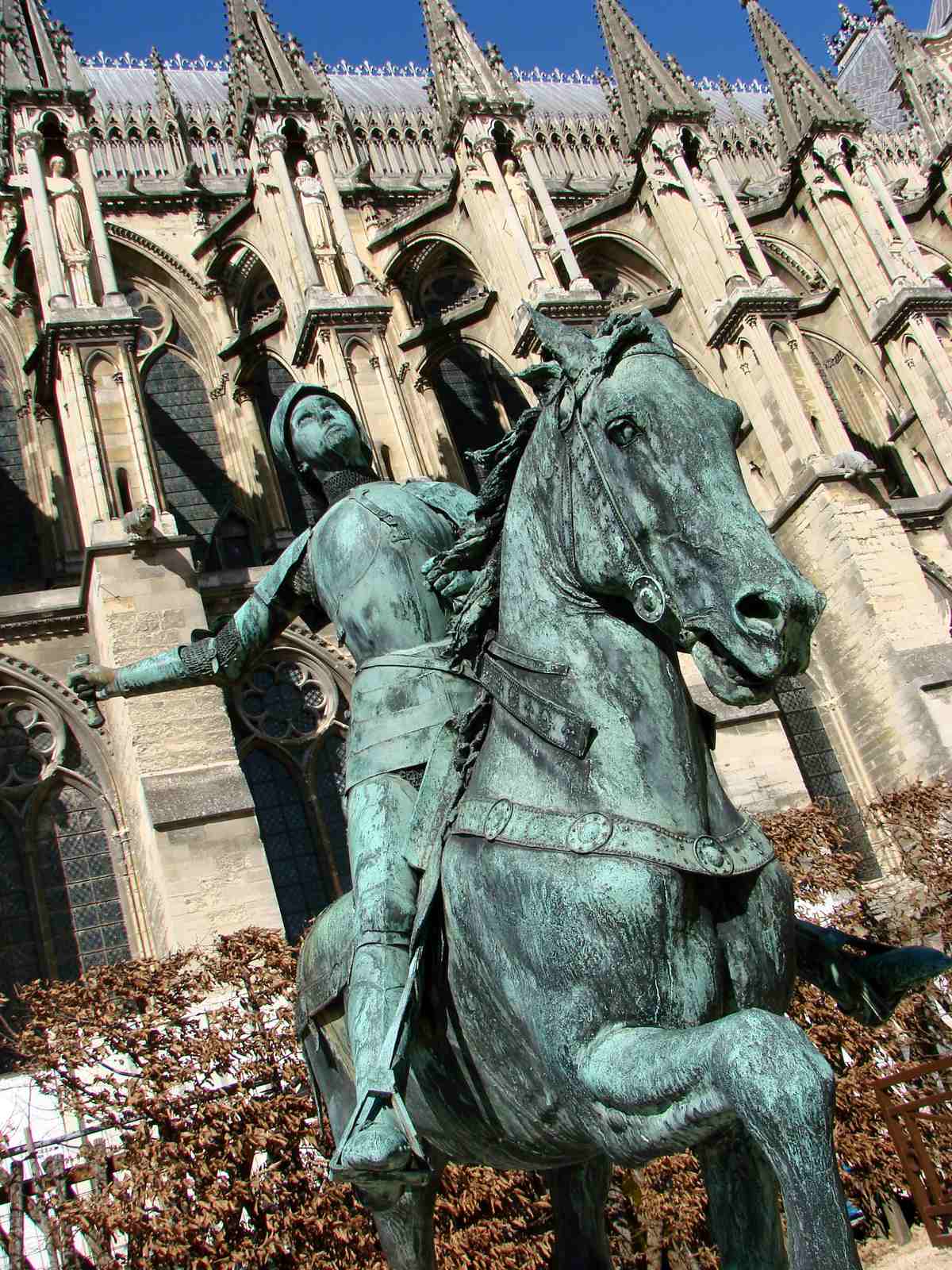
Paul Dubois’s equestrian Joan of Arc stands near the cathedral on place du Cardinal-Luçon. Marne tourism dates its inauguration to 14 July 1896, with President Félix Faure attending. The mounted figure gives Reims a permanent image of the heroine outside the church associated with Charles VII’s coronation. It can be seen on an ordinary day as well as a festival weekend, and remains one of the clearest landmarks for following the story on foot.
The Musée Camille Claudel preserves a preparatory wax for Dubois’s monument. Its collection account connects that small study with the monumental work inaugurated at Reims in 1896. Seeing the sketch and the final equestrian figure as stages of one commission adds another layer to the festival’s imagery: the Joan familiar in the square is also a nineteenth-century sculptor’s interpretation. Medieval memory was being reshaped in bronze long before the contemporary street performances.
Artistic interpretations also made the Reims ceremony a national image. The public cultural resource L’Histoire par l’image discusses paintings of Joan produced in 1825, 1855 and 1930, including the coronation of Charles VII at Reims. Those works belong to later moments of commemoration, with artists looking back across centuries. They help explain why the festival can summon a recognisable heroine through armour, a banner and a royal setting without those modern images being contemporary portraits of Joan.

Commemoration in the twentieth century
The French law of 10 July 1920 established the national celebration of Joan of Arc and patriotism, held on the second Sunday of May. That national commemorative calendar provides context for Johanniques celebrations in several French towns. Reims’s own historical weekend has used different late-May or early-June dates in recent editions. The national law is a documented milestone in public remembrance; it should not be mistaken for proof that today’s particular Reims programme began in its present form in 1920.
Archival evidence records a substantial Reims celebration for the five-hundredth anniversary of the 1429 journey. FranceArchives lists material for the Joan of Arc centenary festivities at Reims from 16 to 21 July 1929, and the Marne archives catalogue identifies the 1429–1929 commemorative programme. That dated record shows the city publicly celebrating the episode a century before the current Épopée Légendaire weekends. It does not establish an uninterrupted annual sequence between every historical commemoration and the modern festival.
Image’Est’s account of the established Fêtes Johanniques describes medieval street entertainment around the cathedral, between rue Rockefeller and rue de la Grue. It records a recreated village with artists and costumed craftspeople, plus period-inspired activities and food. Those descriptions preserve the character of an earlier festival format. They belong to the documented history of the celebration, while the location and programme of each new edition can change.
Recent festivals and a broader royal story
The City of Reims’s magazine reported on the Fêtes Johanniques held on 2 and 3 June 2018. Musicians, craftspeople, period troupes, performances and recreated camps brought the city centre into a medieval setting, culminating in the traditional procession. The municipal report explicitly linked the weekend with Joan’s role in Charles VII’s 1429 coronation. This is a useful snapshot of the festival before its later change of name, preserving both the living-history activities and the procession as central features.
For 31 May and 1 June 2025, the city advertised Reims, l’Épopée Légendaire as a new chapter in its traditional Joan of Arc festival. The programme still included a historical market, shows and a parade, but the new name opened the story towards a wider royal history. Reims tourism’s own 2025 event page used both the new title and the familiar Fêtes Johanniques connection, helping returning visitors recognise the continuity.
Participating craft workshop Atelier Rêve Doré recorded the 2025 weekend in its own event diary. Its listing named the cathedral quarter, place Royale and place du Forum as three settings for markets, workshops and activities. A participant’s dated record adds a ground-level view to the city’s announcement. It also demonstrates why a parade route or market location from one year should not be treated as a permanent feature of the festival.

2026: Saint-Remi, the Voie des Sacres and Notre-Dame
The completed 2026 edition took place on 30 and 31 May. Reims tourism highlighted the Saturday parade at 21:00 between Saint-Remi basilica and the cathedral, with medieval markets around Notre-Dame and in Parc Saint-Remi. The tourist office’s account introduced Joan of Arc and Charles VII alongside Saint Louis and Blanche of Castile. Two royal periods therefore entered the same public narrative, with the city’s ceremonial geography linking them.
The procession’s Saint-Remi-to-cathedral connection has a historical foundation. The abbey kept the Holy Ampulla used in royal anointing, while the cathedral hosted the coronation itself. UNESCO inscribed the cathedral, former abbey and Palace of Tau together in 1991, recognising their architectural significance and relationship with French monarchy. A festival procession between these places can thus make a ceremonial connection visible across the streets, even while its performances remain a modern interpretation.
The city has announced the next Épopée Légendaire for 29 and 30 May 2027, with the detailed information to follow in spring. Use the current event guide for that edition’s official programme. For the historical walk, begin at Dubois’s 1896 statue, look at the cathedral that received Charles VII in 1429, and follow the wider royal story towards Saint-Remi. The festival’s changing name sits beside an enduring, precisely located episode in Reims’s past.
Reading the royal façade in daylight
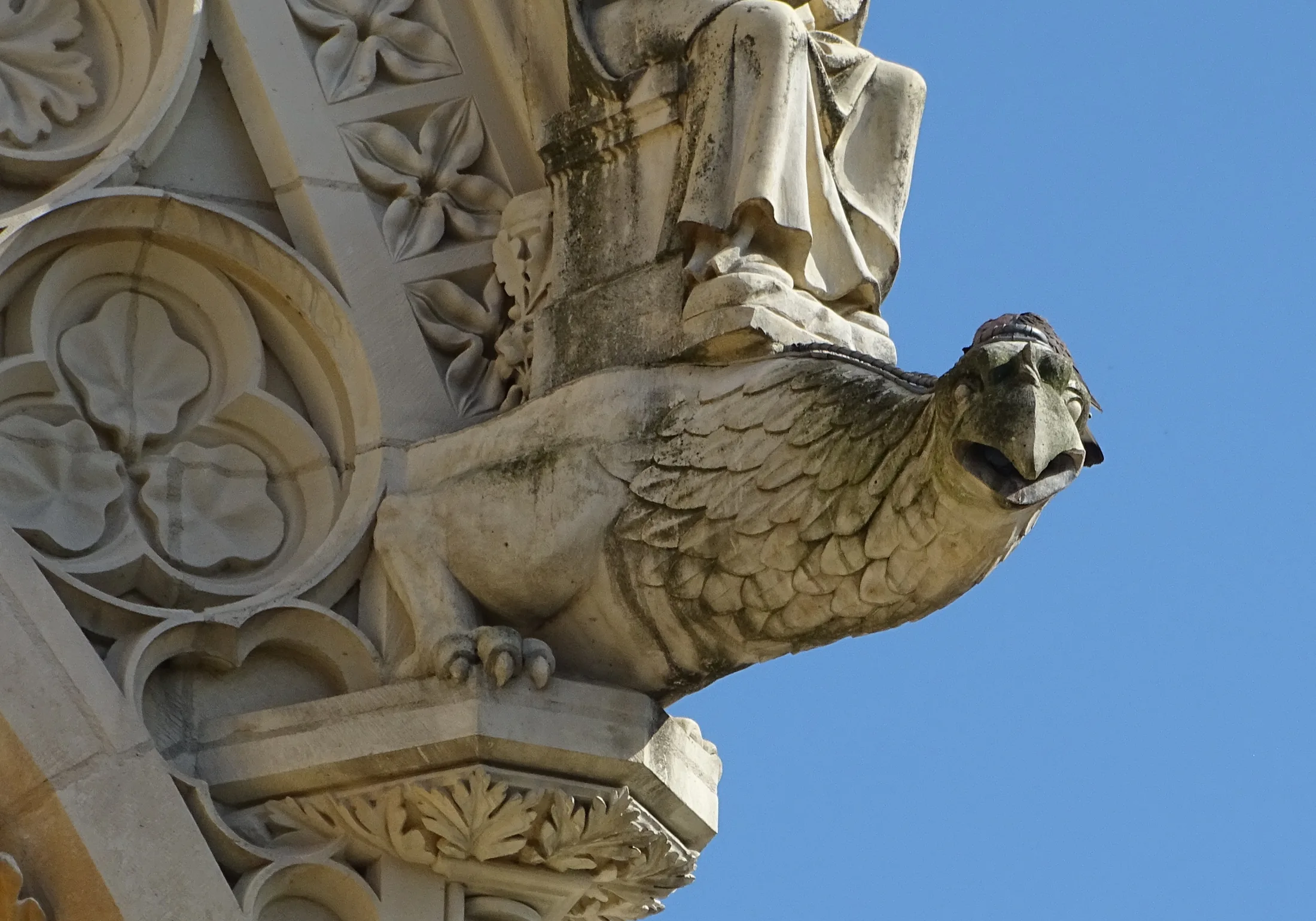
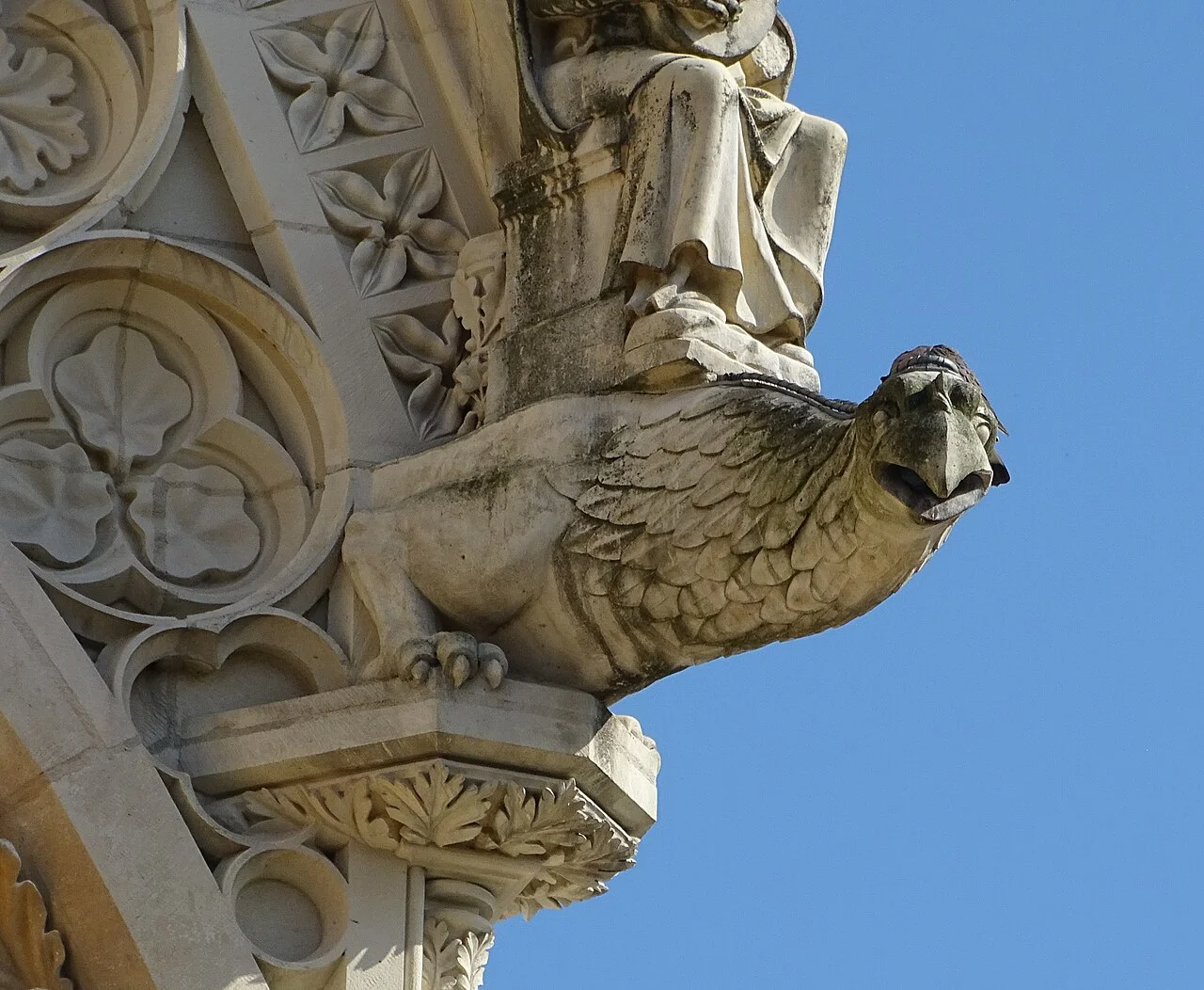
Notre-Dame’s western façade gives the festival’s royal imagery a permanent sculptural counterpart. The monument authority counts 2,303 statues across the cathedral and identifies the gallery of kings above the portals. Its royal figures are about 4.60 metres high at a level roughly forty metres above the ground. This is architecture designed to be read through ceremony and symbolic images. A daytime look at those crowned figures adds another historical layer to the modern procession below them, while the separate 249-step tower route offers a closer view.
The national law’s title names Joan of Arc explicitly, and its July 1920 date precedes Reims’s documented five-hundredth-anniversary celebrations of 1929. These are separate milestones in the growth of public remembrance. The modern Épopée Légendaire keeps Joan in the story while widening the cast to other royal figures, a change visible in the published Saint Louis and Blanche of Castile elements of the 2026 edition.
Plan your trip to Reims
Get there
Book a tour
Select the departure point and date on the booking page. Check the meeting point, language and inclusions before paying.
Compare toursWe may earn a commission if you book through these links, at no extra cost to you.