

1990: listening to Reims differently
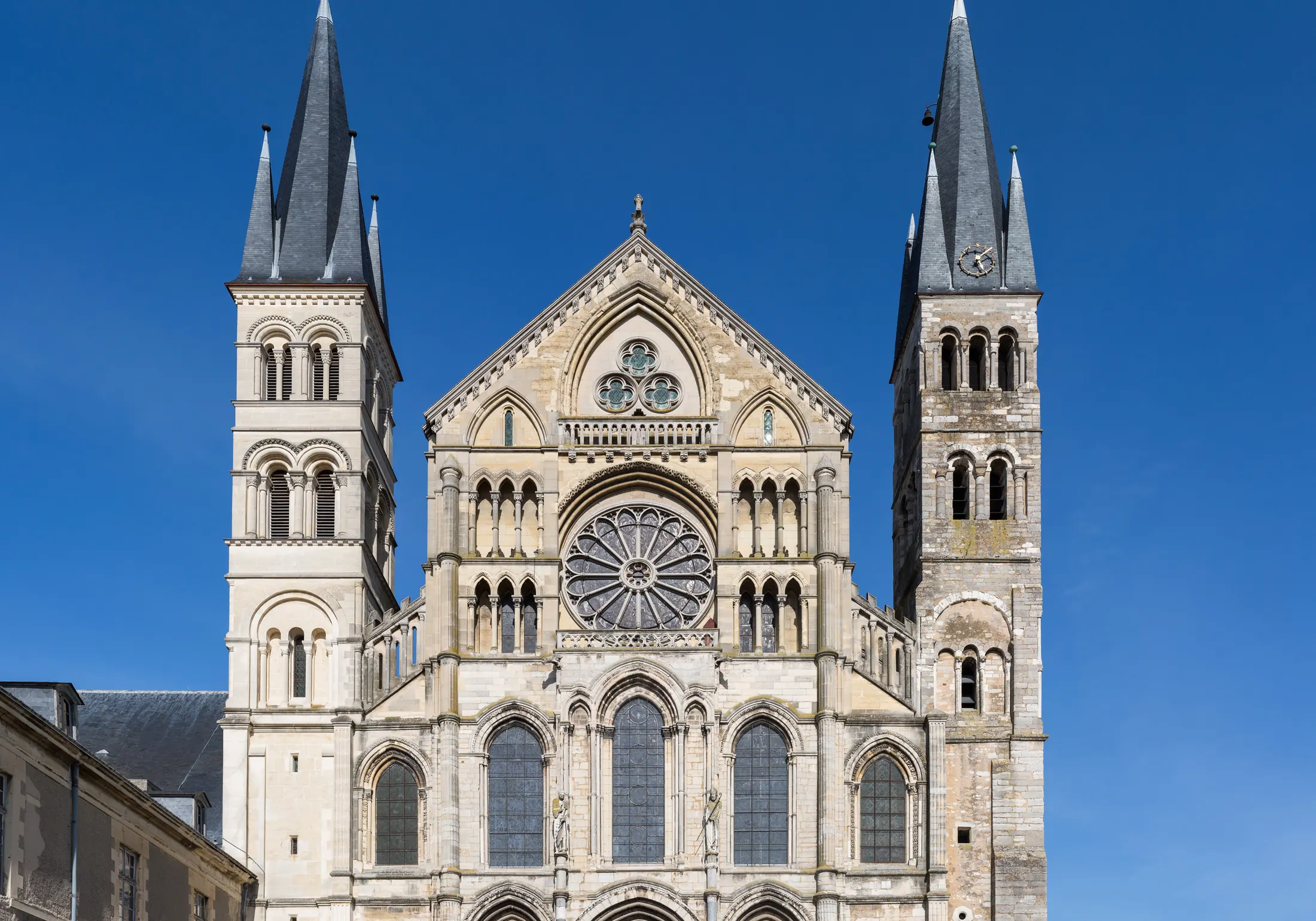
Reims launched the Flâneries Musicales in 1990 to let music reveal its heritage. The first season offered 100 events and attracted more than 13,000 listeners to free concerts. Four years later, the association records 150 events and an audience of 100,000. Classical music and jazz shared that early summer programme. The idea was geographically generous: listening could take people into a monument, a garden or a Champagne setting, making the city itself part of the concert experience.
International patrons quickly joined the new festival. Yehudi Menuhin became its first major patron in 1991, followed by Mstislav Rostropovich in 1995 and Montserrat Caballé in 1998. A violinist, cellist and singer gave the young event connections across several branches of classical performance. These names belong to its documented patronage history; the festival’s founding purpose remained the connection between music and Reims’s own architectural and cultural places.
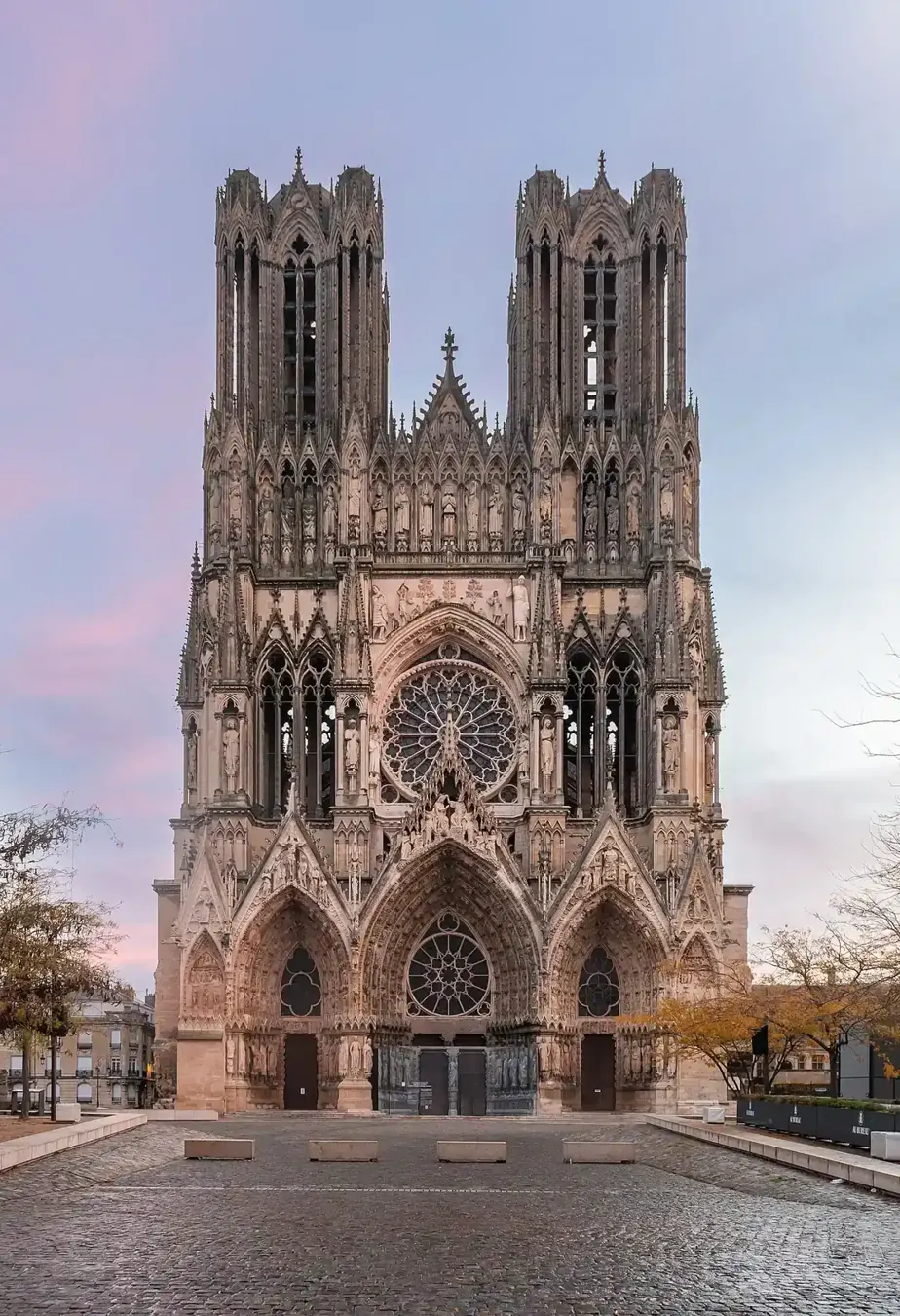
The association describes the established summer format as roughly 50 concerts in about 30 locations, with around one third free. Its named settings include UNESCO monuments, Champagne cellars, the Hôtel de Ville’s reception hall, parks, gardens and cultural venues. A chamber recital and a large orchestral concert therefore sit within one festival without needing the same room or audience size. That mixture is the practical expression of the 1990 idea: hear different music in different corners of Reims.
The 2024 festival: a surviving programme to explore
The official 35th-edition pocket programme dates the main 2024 festival from 12 June to 5 July, followed by the picnic concert on 6 July. The separation between the concert run and the outdoor finale is important when reading old calendars. A summer edition can end its indoor sequence on one date and still have one major public gathering to come. The booklet preserves the programme as it was offered that year.
One of the 2024 family activities took music to La Boussole, 6 avenue Léon Blum. Its kamishibaï sessions combined Japanese-style illustrated storytelling with live instruments: Nathalie Galloro narrated, Lydie Cerf played flute, Philippe Quéraud horn and Émilien Hu violin. The collaboration involved the Orchestre national de Metz Grand Est and Compagnie Nathalie Galloro. Two horn-and-flute sessions and two violin sessions introduced children to orchestral instruments through stories, a concrete example of the festival’s younger-audience strand.
The 2024 booklet also records the festival’s travelling ticket office: a truck on place d’Erlon on Wednesday afternoons and at the Boulingrin market on Saturday mornings, before selling at venues ahead of concerts. The box office moved through the same city that the audiences explored. It is a small but revealing piece of festival history, connecting a classical programme with ordinary shopping streets and the covered market instead of confining ticket-buying to one concert hall.

2025: Art Deco and the years between the wars
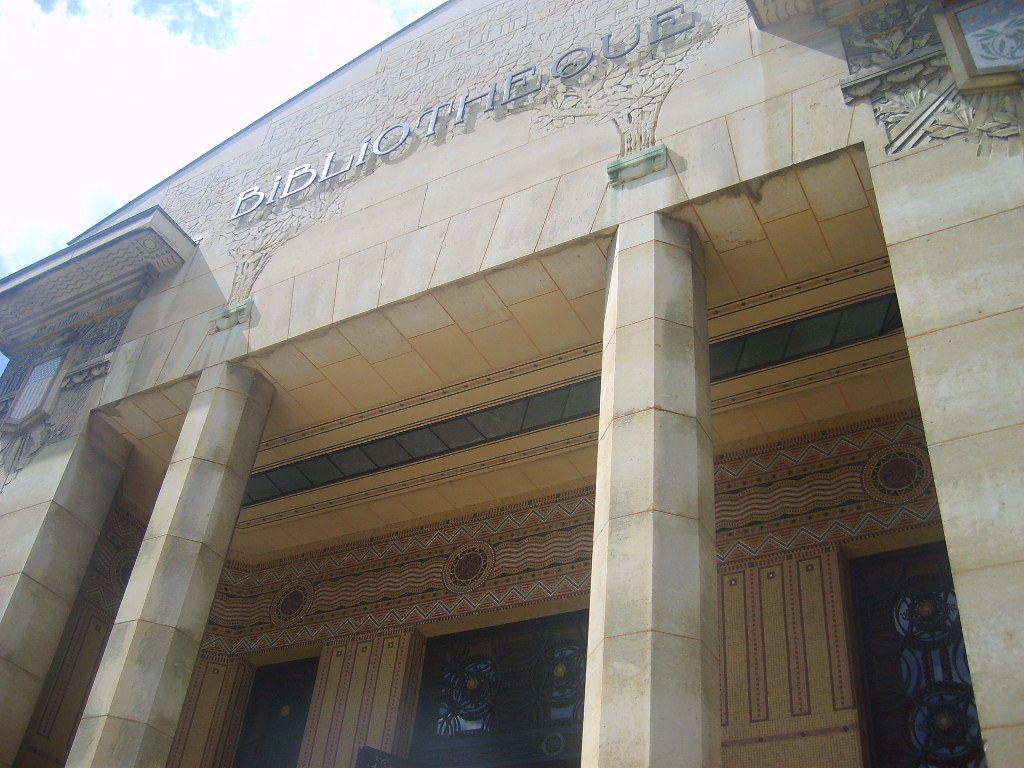
The 36th edition’s official programme placed its main concert run between 19 June and 11 July 2025, with a picnic finale on 19 July. Its editorial connected the music with Reims’s Art Deco centenary and the international decorative-arts exhibition of 1925. The programme looked towards the period from 1900 to 1930, placing the city’s twentieth-century identity beside the earlier monuments that had helped inspire the festival.
The closing week of the 2025 programme illustrates that breadth. Violinist Amaury Coeytaux and pianist Geoffroy Couteau were listed on 9 July; Geister Duo on 10 July; Vassilena Serafimova and Thomas Enhco also on 10 July. The Orchestre national de Metz Grand Est under David Reiland closed the main run on 11 July. Chamber music, percussion, piano and orchestra all belonged to the same final stretch, giving listeners markedly different ensembles within a few days.
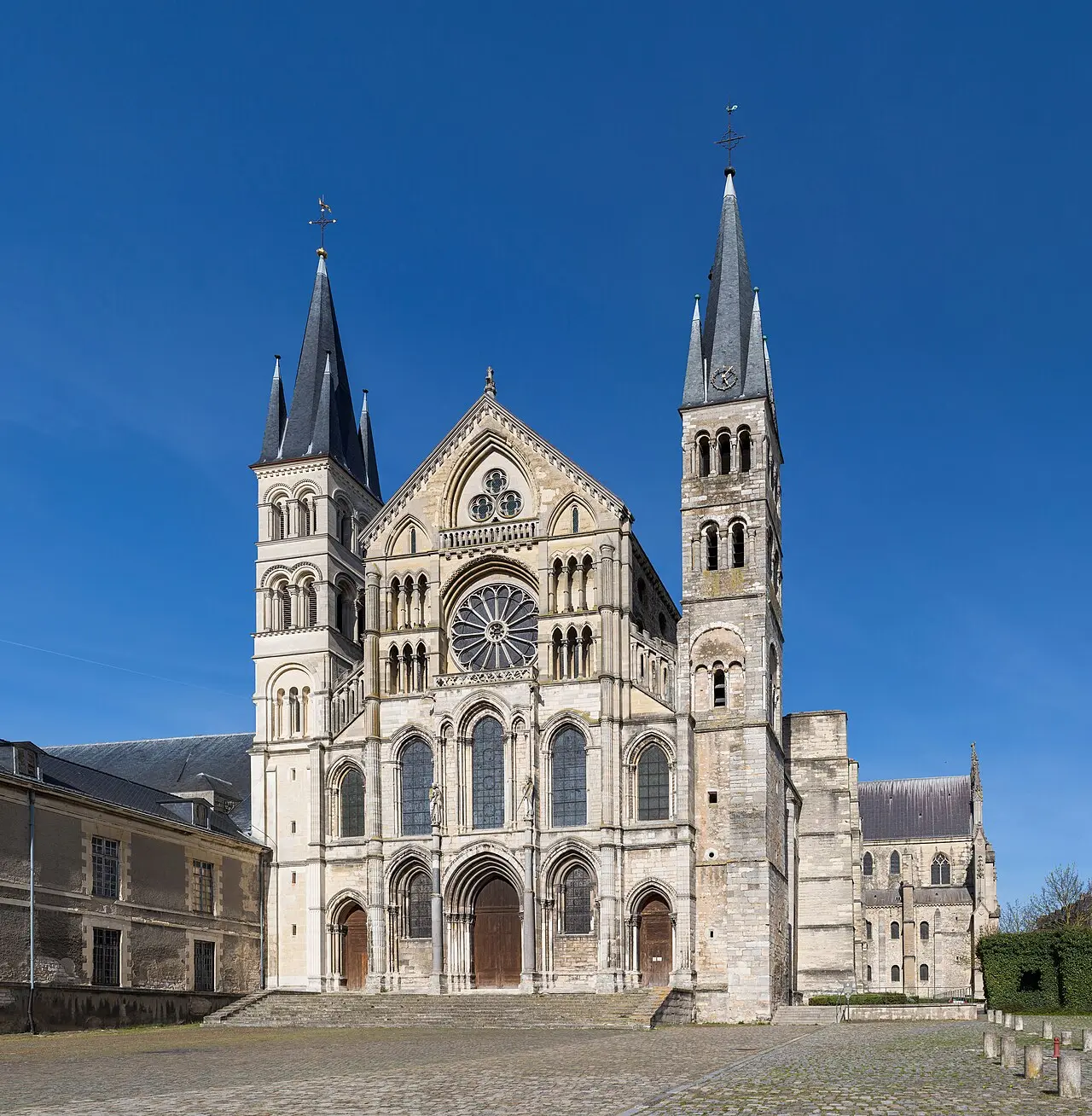
The 2025 reservation form distinguished individual concerts from the 19 July picnic. It also printed venue-specific door-opening arrangements, including longer arrival windows at Saint-Remi basilica, the Opéra and Domaine Les Crayères. Those details preserve how a heritage festival worked on the ground: the same organisation had to fit audiences into different buildings, with different entrances and capacities. The historical booklet remains a programme record, not a tariff or arrival instruction for a future season.
2026: a musical journey from Prague to Italy
The 37th edition ran from 18 June to 18 July 2026 under a travel theme. Its opening brought the Prague Royal Philharmonic and conductor Heiko Mathias Förster to Saint-Remi basilica on 18 June. The following evening continued the Prague orchestra’s visit with violinist Karen Su and violist Miguel da Silva. The programme’s geography then travelled through New Orleans jazz, Madrid, Buenos Aires and the Danube, turning an international musical journey into a succession of Reims appointments.
The 2026 booklet’s picnic finale was Bella Italia! at Parc de Champagne on 18 July. The announced performers included violinist Esther Abrami, the Orchestre de la Garde Républicaine and the Chœur de l’Armée Française, with Sébastien Billard conducting. The park gathering gave that edition a large outdoor conclusion. It belongs to the completed 2026 festival, distinct from the recital and lecture dates that continued to appear on the organiser’s website in autumn.
The theme was visible in the titles as well as the artists: Un soir à Prague opened the programme, while other entries named Vienne, Madrid and Buenos Aires. The 2026 editorial was signed by artistic delegate Hélène Segré. Read with the 2025 Art Deco programme, it shows how a stable festival format can carry a different organising idea from one summer to the next, with the individual works and performers changing around it.

Beyond summer: children, hospitals and new performers
Les Petits Flâneurs gives children a programme of musical performances within the wider festival. The association also describes cultural activity in hospitals and medical-social establishments, reaching listeners who cannot easily attend a conventional concert. These activities extend the original 1990 ambition of wider access into places beyond the monuments and gardens. The separately named cultural-action programme is part of the association’s work throughout the year.
Happy Flâneries adds a regular first-Thursday meeting with young musicians between summer editions. Lectures provide another strand, introducing works, artists and music history. In autumn 2026, the official listings included harpist Shamim Minoo at Villa Douce on 5 November and Duo Arborescence at the regional conservatory on 3 December. The same website’s retrospective summer photographs therefore sit beside genuinely upcoming dates, each belonging to a different part of the year-round programme.
A further 2026 listing placed pianist Dmitry Masleev at Salle Louise, Domaine Pommery, on 16 December. The venue name matters: a concert in a Champagne estate is a music booking, with its own room and programme. For the current calendar, ticket links and access enquiries, continue to the Flâneries visitor guide. The festival’s history is best heard in the contrast between its 100 free events in 1990 and today’s combination of summer concerts, park picnic, family performances and winter recitals.
A festival that changes the listening room
The 2026 association description names the Hôtel de Ville’s reception hall alongside Champagne cellars, parks and UNESCO monuments as festival spaces. These are places with different usual purposes, temporarily connected by the concert programme. The 2024 kamishibaï at La Boussole and the December 2026 piano recital at Pommery illustrate opposite ends of that range: a neighbourhood learning setting and a Champagne estate. The shared element is a specific performance, placed where another activity normally occupies the building.
The cultural-action programme explicitly includes hospitals and medical-social establishments as well as public concert settings. Combined with the named Les Petits Flâneurs strand for children and the first-Thursday Happy Flâneries concerts, it gives the association several routes to listeners outside the summer audience. That expansion remains connected with its founding city of Reims in 1990: a heritage festival has developed year-round work in performance, explanation and musical introduction.
Plan your trip to Reims
Get there
Book a tour
Select the departure point and date on the booking page. Check the meeting point, language and inclusions before paying.
Compare toursWe may earn a commission if you book through these links, at no extra cost to you.