

What UNESCO inscribed on 4 July 2015
Champagne Hillsides, Houses and Cellars was inscribed on the UNESCO World Heritage List in 2015. The Union des Maisons de Champagne records the vote on 4 July 2015, during the World Heritage Committee’s 39th session in Bonn. UNESCO lists the property under criteria (iii), (iv) and (vi).
The property recognises the linked landscape and industrial system used to make and sell Champagne. Its three principal groups are the historic vineyard hillsides, Saint-Nicaise Hill in Reims, and the Avenue de Champagne with Fort Chabrol in Épernay. The inscription does not make every Champagne vineyard a separately ticketed attraction.
1. The historic hillsides
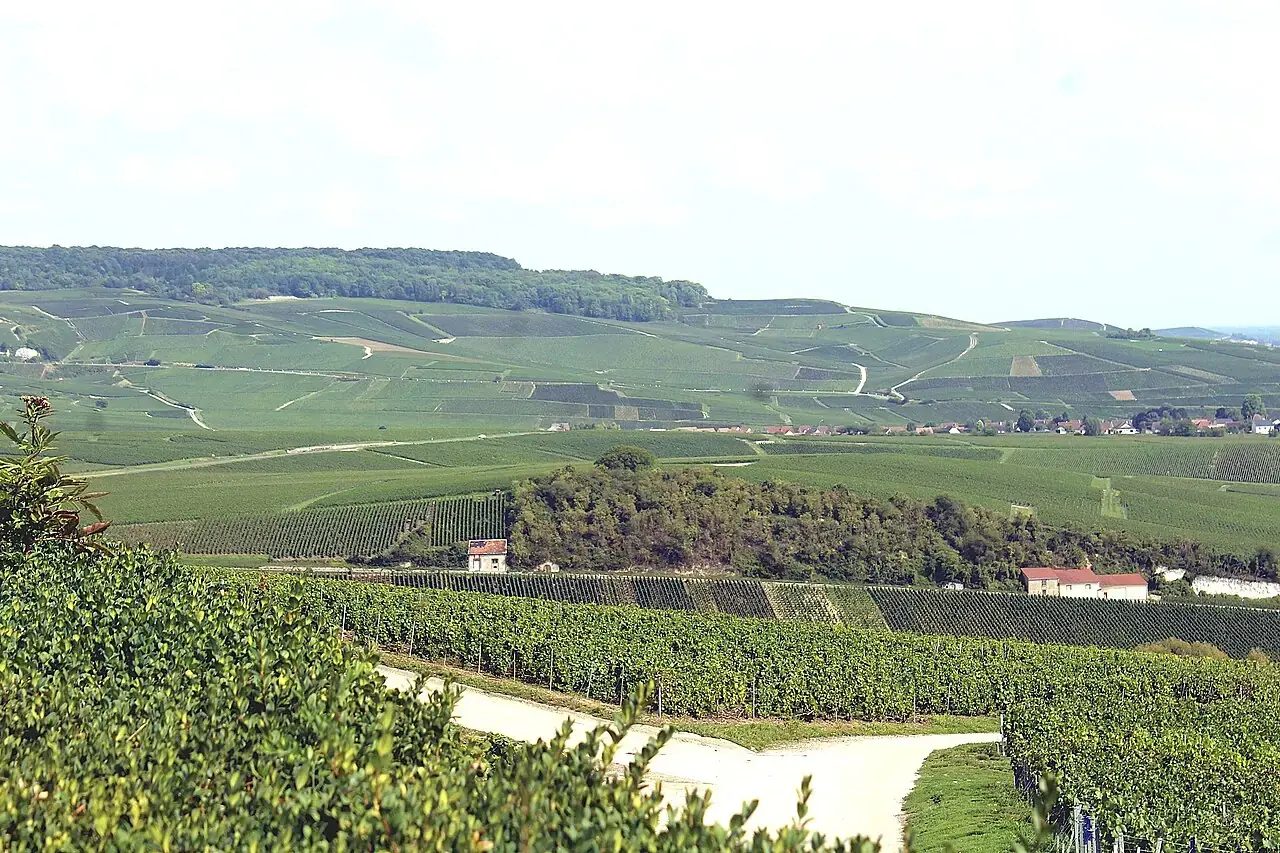
The historic vineyard slopes include the sector around Hautvillers, Aÿ and Mareuil-sur-Aÿ. Their role in the UNESCO account is the supply of grapes to Champagne production. From Hautvillers, the public village streets and viewpoints provide a way to see that landscape without entering private vines.
Saint-Sindulphe is Hautvillers’ public abbey church and contains the tomb of Dom Pierre Pérignon. The surrounding former Abbaye Saint-Pierre belongs to Moët & Chandon and should not be presented as freely accessible. A tour product mentioning the abbey may mean the church and the village, not unrestricted entry to the abbey estate.

2. Saint-Nicaise Hill in Reims
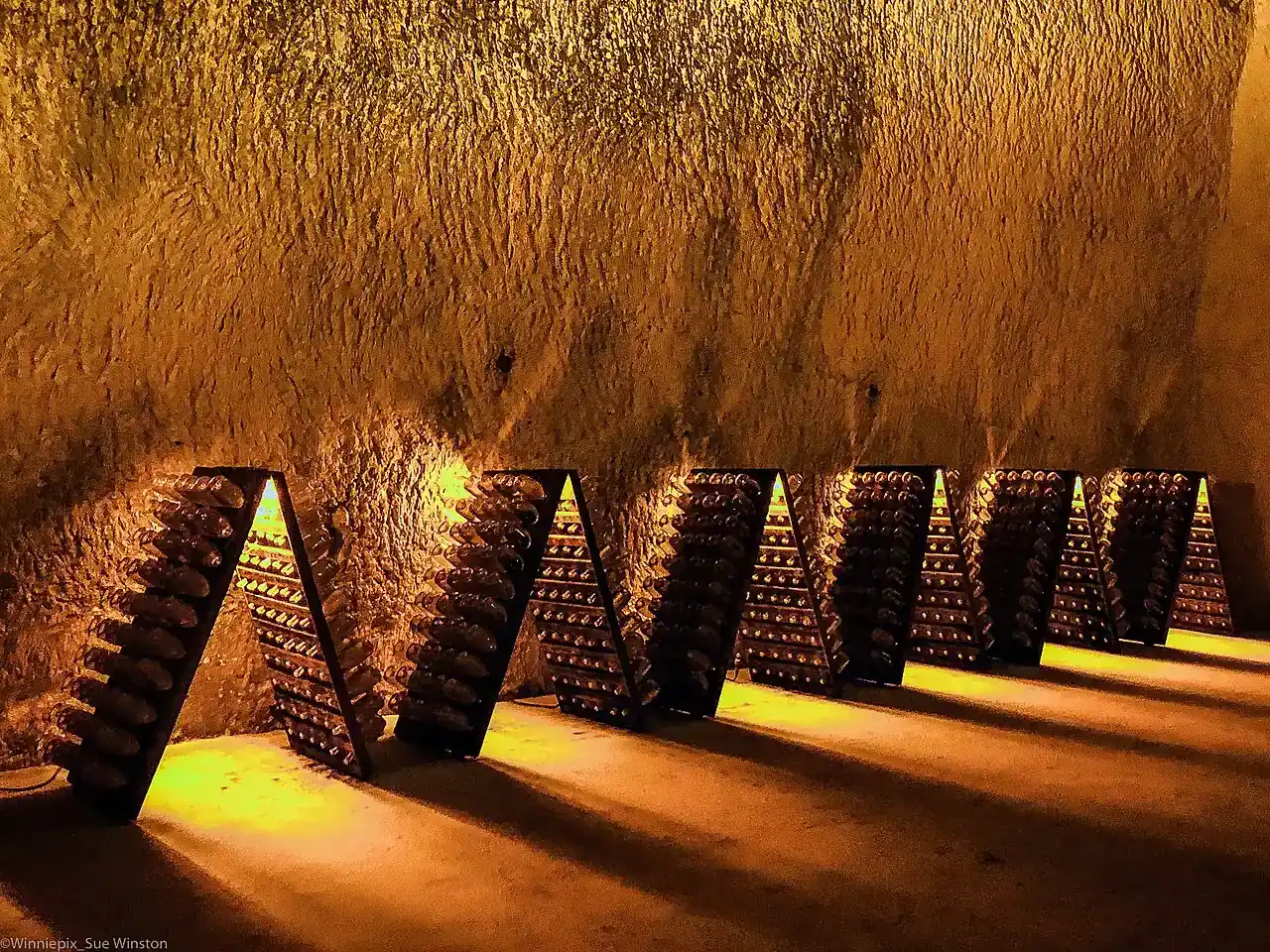
Saint-Nicaise Hill combines production buildings with underground chalk cellars. UNESCO’s component maps identify the Taittinger cellars and Martel cellars as underground elements, alongside other parts of the hill. The relationship between working buildings above ground and storage below ground is central to this component.
Ruinart, Taittinger, Pommery and Veuve Clicquot each sell their own visitor experiences. Book the specific house and language on its official site; a UNESCO listing supplies no shared opening timetable or region-wide cellar ticket. The Reims hub links the houses and their visitor addresses.
3. Épernay’s Avenue and Fort Chabrol
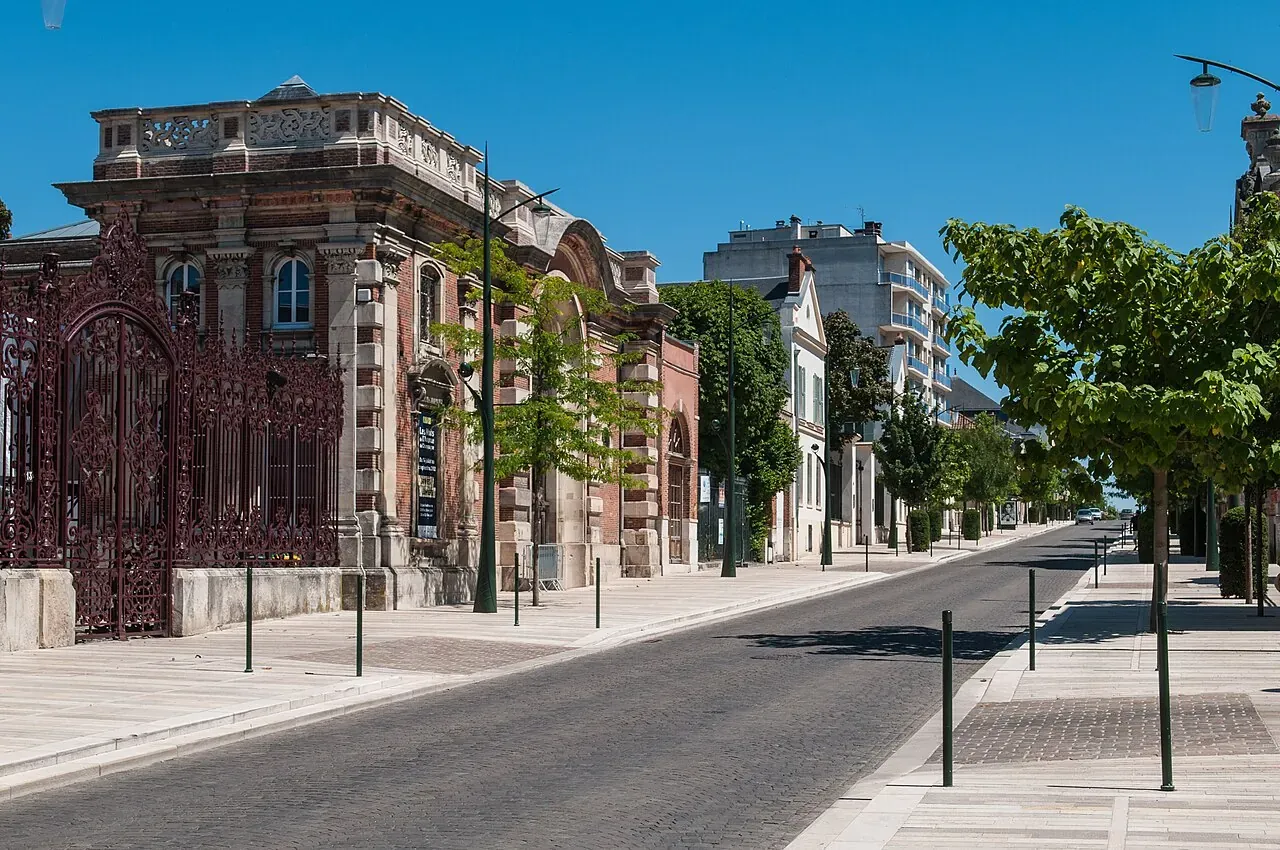
UNESCO’s mapped Épernay elements include the Avenue de Champagne, Fort Chabrol and the underground Avenue cellars. The street’s mansions illustrate the sales and distribution side of the Champagne system; the underground networks preserve its production and storage history.
Our Avenue walk starts at the town-centre end and distinguishes public visits from exterior viewing. Pol Roger at 34 avenue de Champagne states that it is not open to public visits. Moët & Chandon, Mercier, Boizel and de Venoge use their own booking systems; a house façade can be seen from the street without implying access to its cellars.

A different Reims World Heritage property
Notre-Dame Cathedral, the former Abbey of Saint-Rémi and the Palace of Tau were inscribed together in 1991, under UNESCO property number 601. That is a separate listing from Champagne Hillsides, Houses and Cellars, property number 1465. A Reims trip can encounter both inscriptions in the same day.
The cathedral listing concerns the royal and religious heritage of Reims; the Champagne listing concerns the wine landscape and its production system. Current admission, restoration work and accessibility are supplied by each monument or house, not by the UNESCO description. Follow the official monument links in the Reims guide for the visit you are booking.
Follow the three-part story on the ground
The three ensembles make a useful sequence for a visit: vines on the historic slopes, production on Saint-Nicaise Hill, and the houses’ commercial display on the Avenue de Champagne. Begin with the Hautvillers village guide, book one Reims cellar route, then walk the Avenue in Épernay. Each stop reveals a different part of the same production system; the UNESCO name is the link between them.
The Comité Champagne records eight years of work before the unanimous 2015 inscription at Bonn. The listing therefore recognises a regional application and a landscape shared by growers, houses and residents. It is not an award to one producer. Hautvillers, Aÿ and Mareuil-sur-Aÿ remain wine-growing communities within that history, while the houses in Reims and Épernay continue to use their underground storage networks.
Fort Chabrol: the less obvious part of Épernay
Fort Chabrol at 1 route de Mardeuil is the former École pratique de Viticulture Moët & Chandon and its research laboratories. The Union des Maisons de Champagne dates the practical school to 1900. Its work responded to phylloxera, the insect that devastated European vineyards, and helped train the growers who rebuilt Champagne’s vines. The modest scientific part of the landscape belongs beside the more conspicuous Avenue mansions.
The World Heritage mission describes a grafting unit and separate wine-growing and oenology laboratories at Fort Chabrol. The response involved grafting local varieties onto resistant American rootstocks, preserving the Champagne grapes while changing their roots. Fort Chabrol gained historic-monument status in 2012. Moët’s named Terroir Treasures experience now identifies its private vineyard site; book that actual authorised programme for any interior access, since a view from the road and an organised visit are different arrangements.
Chemin Vert: look beyond the bottles
The Cité-jardin du Chemin Vert in Reims adds a social history to the Saint-Nicaise component. Founded in 1922 on the initiative of industrialist Georges Charbonneaux, the garden city placed houses around shared services and a church. The World Heritage mission records 617 homes built to fourteen designs after the First World War, with architect Jean-Marcel Auburtin responsible for the layout. Its streets show how the Champagne story also includes the daily lives of working families.
The community building was completed in 1925, and work on Saint-Nicaise church began in 1923. Maurice Denis, René Lalique and Gustave Jaulmes contributed to its decoration. Lalique came from Aÿ, connecting the hillside villages with this Reims neighbourhood through an individual artist. Chemin Vert is still residential: enjoy its architectural setting from public streets and use the official visitor information for any church interior visit.
Art and architecture on Saint-Nicaise Hill
Pommery’s red-brick and blue-grey buildings were conceived with British customers in mind, using a Tudor and Elizabethan architectural vocabulary. Madame Pommery’s estate officially opened in 1878. Underground, the house’s current visitor information gives eighteen kilometres of galleries connecting older chalk quarries; Gustave Navlet’s monumental reliefs add a nineteenth-century artistic layer to the working cellar spaces. Pommery’s guide distinguishes its current art and wine experiences.
At Ruinart, the house founded in 1729 acquired and developed chalk cellars beneath Reims during the eighteenth and nineteenth centuries. Its quarries gained historic-monument status in 1931. The modern visitor site at 4 rue des Crayères introduces another architectural layer, with a pavilion by Sou Fujimoto, interiors by Gwenaël Nicolas and a landscape by Christophe Gautrand. The 2015 World Heritage inscription protects a living production landscape, so a contemporary building can sit alongside much older underground spaces.
A practical UNESCO day without a universal ticket
Taittinger’s route begins at 9 place Saint-Nicaise, Pommery uses 5 place du Général Gouraud, and Ruinart receives visitors at 4 rue des Crayères. Those are separate entrances and separate booking systems. Choose the language and named tasting on the producer’s official reservation. The Reims accessibility guide also separates the house routes: Taittinger describes numerous stairs, while other venues publish their own assistance arrangements.
For Épernay, save the visitor entrance at Moët & Chandon, 18 avenue de Champagne, and Mercier at number 68. Moët quotes five minutes on foot from Épernay station. Pol Roger at number 34 is an exterior-viewing stop because the house states it is not open to public visits. These precise entrances make the Avenue’s role in the UNESCO story visible without implying that inscription opens private mansions or provides a shared cellar pass.
Two listings, two art histories
Inside Notre-Dame Cathedral, Marc Chagall’s windows date to 1974. Imi Knoebel’s coloured windows were commissioned in 2011 and supplemented in 2015, according to the Ministry of Culture. They add twentieth- and twenty-first-century work to the Gothic building recognised in the 1991 listing. This is a different artistic journey from Pommery’s underground contemporary-art programme or Ruinart’s commissioned sculpture garden, even when a Reims itinerary combines them in one visit.
Plan your trip to Champagne
Get there
Book a tour
Select the departure point and date on the booking page. Check the meeting point, language and inclusions before paying.
Compare toursWe may earn a commission if you book through these links, at no extra cost to you.