

History
Louise Pommery became head of Pommery & Greno in 1858 after her husband’s death. Her decision to build a new estate and develop a dry Champagne shaped both the Reims buildings and the wines carrying her name.
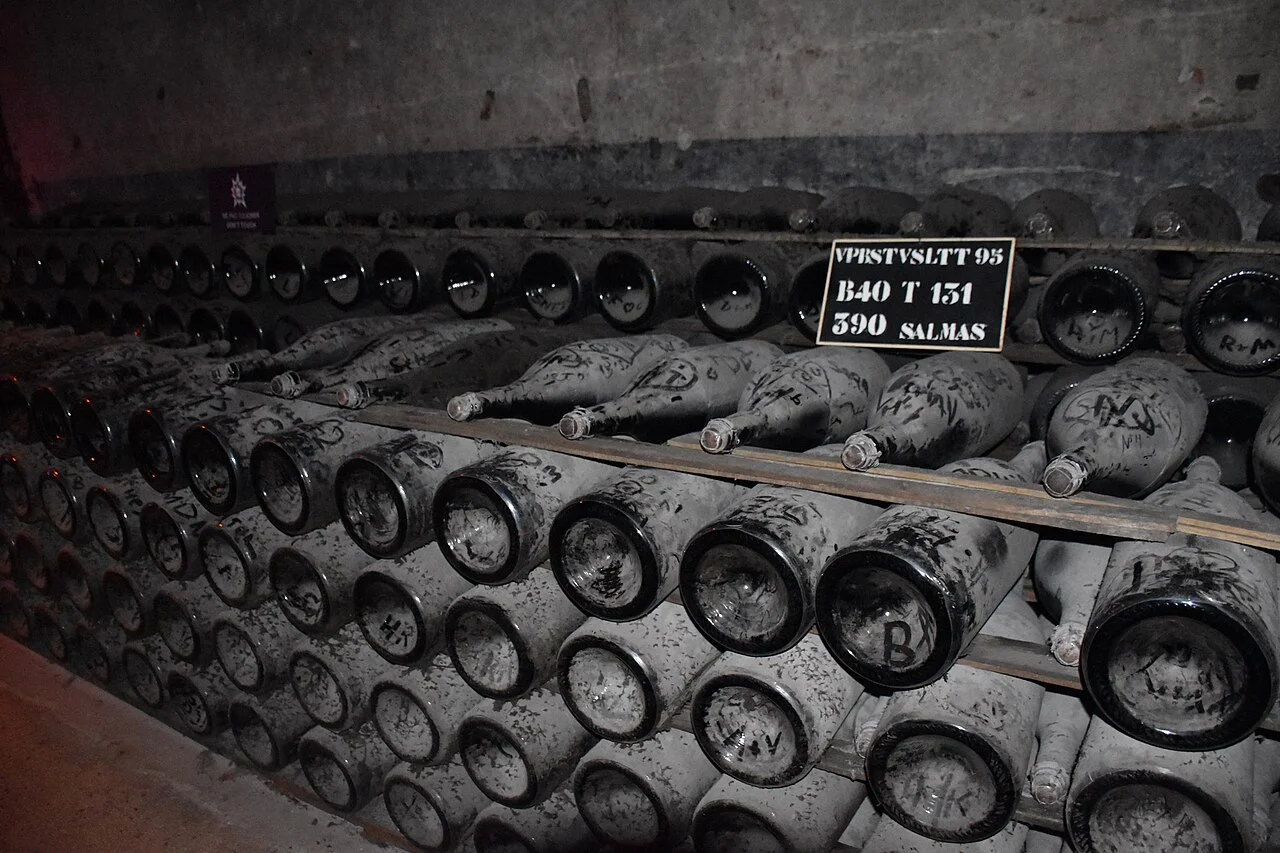
Work on the new site began in July 1868. French and Belgian miners linked the chalk quarries with eighteen kilometres of galleries. Sculptor Gustave Navlet decorated the underground chambers with monumental reliefs. A staircase of 116 steps connected the wine cellars with the surface.
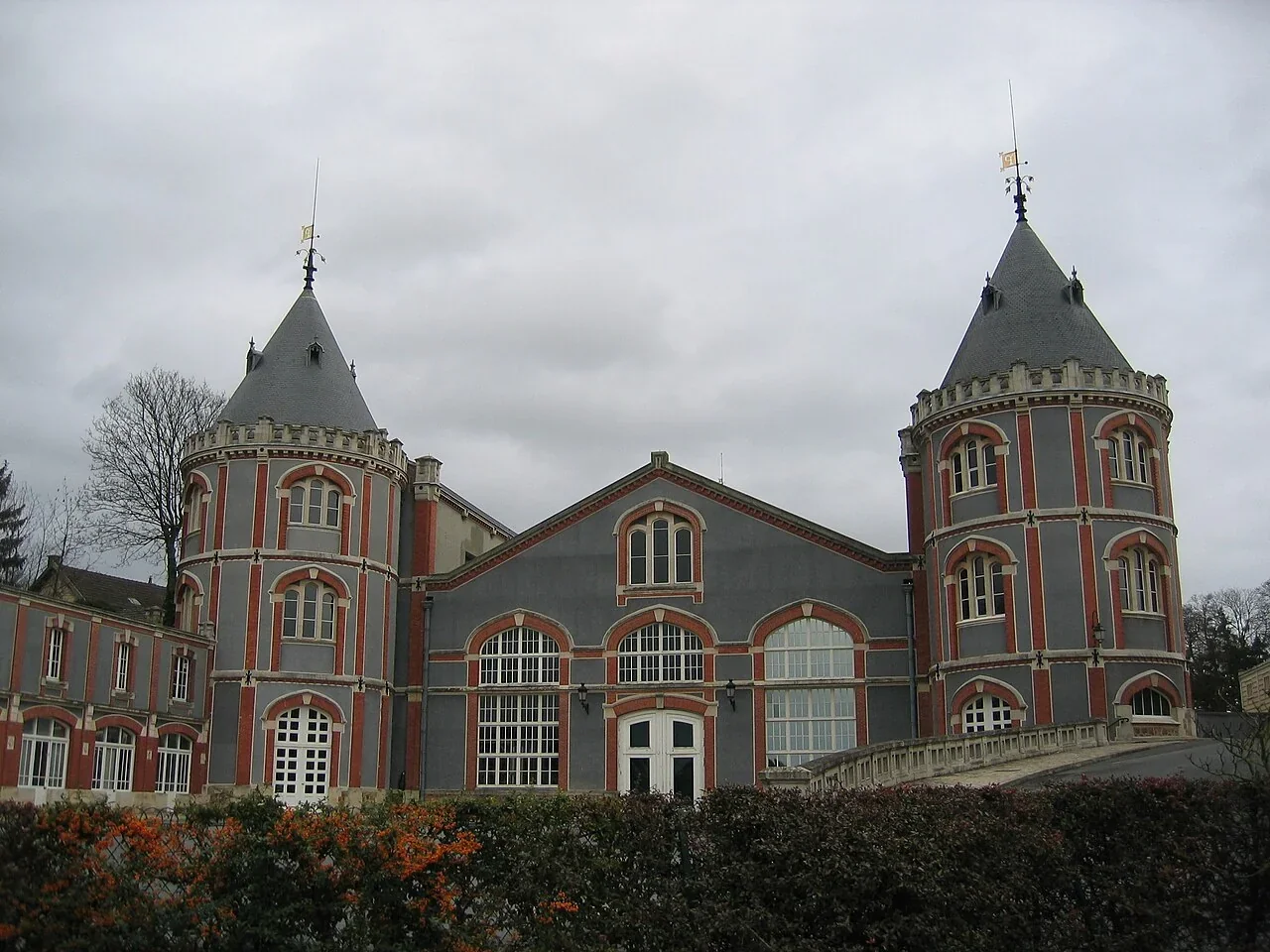
The estate’s Elizabethan neo-Gothic architecture looked towards the tastes of English consumers. Turrets, crenellations and blue-grey façades give the buildings their distinctive appearance. Their H-shaped open plan also left room for expansion, a practical element within the architectural scheme.
Pommery Nature, created in 1874, achieved commercial success as a brut Champagne. The date survives in Apanage Brut 1874, whose modern blend is based principally on 2018 with wines from 2015 and 2012. Its name commemorates a historical milestone.
Within the Reims estate, Les Clos Pompadour comprises twenty-five hectares of enclosed vineyards. The associated cuvée combines Chardonnay, Pinot Noir and Meunier and is released only in magnum. Cuvée Louise honours Louise Pommery through a separate wine from Avize, Cramant and Aÿ.
Experience Pommery began in 2002 and has involved more than three hundred artists. The archive identifies FOREVER as its seventeenth exhibition, dated 2023–2024, with works by Bianca Bondi, Scenocosme, Anthony James and Stephen Wilks. Those dates describe that edition, not the present visit calendar.
Villa Demoiselle adds an Art Nouveau and Art Deco chapter to the estate. Its restoration took four years and brought together furniture and decorative work associated with Louis Majorelle, Gustave Serrurier-Bovy, Tony Selmersheim, Daum and Gallé.
Their open H-shaped plan allowed later expansion of the estate.
Pommery: the place and its story
Madame Pommery’s development of a dry Champagne style is dated to 1874 by the house. Its current cuvée names include Brut Royal, Grand Apanage 1874 and Cuvée Louise. The latter honours Madame Pommery; the group’s published account identifies Avize, Aÿ and Cramant as its three Grand Cru origins.
The current official visit notice reports technical difficulties with the usual online reservation system. It explicitly says the Domaine remains open and sells tickets on arrival. Its page links the Tickeasy booking system and the named partners Winalist, Champagne Booking and Rue des Vignerons.
The Experience Pommery contemporary-art programme began in 2002, placing temporary exhibitions in the underground galleries. The chalk chambers also contain monumental bas-reliefs. The city names given to galleries recall markets developed by the house, rather than the names of individual wines.
Villa Demoiselle is a separate building on the Domaine, combining Art Nouveau and Art Deco. Paul-François and Nathalie Vranken restored the villa after a long period of abandonment, using archival documents over almost four years. Its collection names Majorelle, Serrurier-Bovy, Selmersheim, Daum and Gallé.
The Henry Vasnier ticket combines Pommery cellars with Villa Demoiselle in two hours. The €55 self-guided version pours Brut Royal and Demoiselle Tête de Cuvée; the €65 guided version lists Brut Apanage and Diamant Brut. Villa-only Demoiselle tickets are separate from the Pommery cellar ticket.
Pommery’s practical page lists estate opening seven days a week: 10:00–18:00 Sunday–Thursday and 10:00–19:00 Friday–Saturday. Annual closures are 25 December and 1–2 January. Villa Demoiselle additionally closes Tuesdays, Wednesdays and 13:00–14:00, making its timetable different from the main cellar reception.
The house identifies bus line C from Reims central station to the Pommery stop, quoting twenty minutes, and complimentary courtyard parking. It advertises impaired-mobility visits by arrangement, prohibits flash photography and animals in the cellars, and does not admit unaccompanied minors. Its contact is visites@vrankenpommery.fr or +33 (0)3 26 61 62 56.

Visits and tastings
| Experience | Duration | Adult price from | Tasting | Languages | Booking |
|---|---|---|---|---|---|
| Brut Royal Visit – self-guided | 45 minutes | €30 (checked October 2026) | Pommery Brut Royal | French, English | Official booking |
| Brut Royal Visit – guided | 45 minutes | €36 (checked October 2026) | Pommery Brut Royal | French, English | Official booking |
| Henry Vasnier Visit – self-guided | 120 minutes | €55 (checked October 2026) | Pommery Brut Royal and Demoiselle Tête de Cuvée | French, English | Official booking |
| Henry Vasnier Visit – guided | 120 minutes | €65 (checked October 2026) | Pommery Brut Apanage and Diamant Brut | French, English | Official booking |
| Demoiselle Visit – self-guided | 90 minutes | €30 (checked October 2026) | Demoiselle Tête de Cuvée | French, English | Official booking |
| Demoiselle Visit – guided | 90 minutes | €36 (checked October 2026) | Demoiselle Tête de Cuvée | French, English | Official booking |
| Gastronomic visit | 180 minutes | €150 (checked October 2026) | Meal accompanied by house Champagnes; exact wines not published | French, English | Official booking |
The estate, its vineyards and its wines
Les Clos Pompadour occupies twenty-five hectares of walled vineyards within the Reims estate. Its name refers to Madame de Pompadour. Pommery describes this enclosed vineyard as an experimental site for its winemaking. The associated champagne uses Chardonnay, Pinot Noir and Meunier and is released exclusively in magnum. A cellar ticket and a bottle of Les Clos Pompadour are separately listed products; the wine is not identified as the pour on the entry-level Brut Royal visit.
Brut Royal draws on forty selected villages in the Côte des Blancs, Montagne de Reims and other parts of Champagne. Chardonnay is central to the house’s description of this blend. It is the wine named on the standard Pommery tour and on the self-guided estate-and-Villa Henry Vasnier ticket. The current official product page gives village count and style but does not publish a fixed grape percentage or dosage, so those figures are not assigned to the wine here.
Apanage Brut 1874 connects the house’s dry-champagne history with a modern blend of seventeen crus. Its origins include Clos Pompadour in Reims. The principal harvest is 2018, supplemented by wines from 2015 and 2012. Chardonnay and Pinot Noir lead the blend, with Meunier from the Montagne de Reims and Grande Vallée de la Marne. Pommery specifies forty-eight months of maturation in the Butte Saint-Nicaise chalk cellars. The number 1874 commemorates the historical cuvée; it is not the harvest year of the wine in the glass.
Cuvée Louise 2008 pays tribute to Louise Pommery and uses the Grand Cru villages Avize, Cramant and Aÿ. The official tasting account identifies hazelnut, orange zest, apricot and quince among its descriptors. The separately released Louise Brut Nature 2006 receives no dosage. Its published description names quince paste, candied mirabelle and citron zest. The two dated wines have individual product pages and different ageing histories; neither name appears as a guaranteed pour on the standard Brut Royal ticket.
Grand Cru Royal 2009 is a vintage wine made exclusively from Grand Cru origins. Pommery states that it spends more than twelve years ageing in the cellars. Its harvest account describes a difficult summer followed by conditions that produced ripe fruit. The current product page associates the wine with dried fig, frangipane and toasted-bread notes. These specifications distinguish Grand Cru Royal from the non-vintage Brut Royal, despite the similar bottle names.
Clément Pierlot is the cellar master named on Pommery’s Art of Champagne page. That account describes the first alcoholic fermentations taking place in the first half of October beneath the nineteenth-century wooden cellar structure. It also records the group’s Sustainable Viticulture in Champagne and High Environmental Value certifications, awarded in 2014. Pommery describes a range hierarchy built from approximately forty origins for Brut Royal, seven Grand Cru origins for its vintage wine and three Grand Cru villages for Louise.
Experience Pommery’s online archive identifies its seventeenth exhibition, FOREVER, as the 2023–2024 edition. Documented works include Bianca Bondi’s Wild and Slow, Scenocosme’s Akousmaflore, Anthony James’s Solar Black and Stephen Wilks’s Donkey Roundabout. Anne-Flore Cabanis’s Direction & Aplomb is dated 2022. The archive records more than three hundred participating artists over twenty years. Its historical exhibition dates are distinct from the current cellar-opening calendar; the official visit page supplies the art programme available with a new ticket.
Royal Blue Sky is Pommery’s cuvée designed for service over ice. It blends Pinot Noir, Meunier and Chardonnay and uses a sweeter style than the estate’s brut wines. The official product description identifies dried fig, almond paste, honey, mango and bitter-orange marmalade among its aromas and flavours. Royal Blue Sky has its own product page; it is separate from the Brut Royal served with the standard cellar admission.
Access and facilities
The 50ha Domaine has welcomed visitors since 1878. Its cellar network connects more than sixty crayères with 18km of galleries, reached by a staircase of 116 steps. Madame Pommery’s project joined older quarry spaces below Saint-Nicaise Hill; the house quotes approximately 30m below ground, 10°C and 98% humidity.
The Pommery estate is at 5 place du Général Gouraud. Elizabethan-style buildings stand above Gallo-Roman chalk pits, while contemporary art occupies the underground visit route. The official practical information gives 10°C for the cellars.
Official information
Plan nearby visits
Build your visit into a fuller stay with our Reims guide, compare tours and packages and find somewhere comfortable to stay.
Plan your trip to Reims
Get there
Book a tour
Select the departure point and date on the booking page. Check the meeting point, language and inclusions before paying.
Compare toursWe may earn a commission if you book through these links, at no extra cost to you.
From Reims cathedral to the visitor address
Notre-Dame Cathedral to the house: about 1.9 km, 26 minutes walking. Open this OpenStreetMap route.