
A high village above the Marne
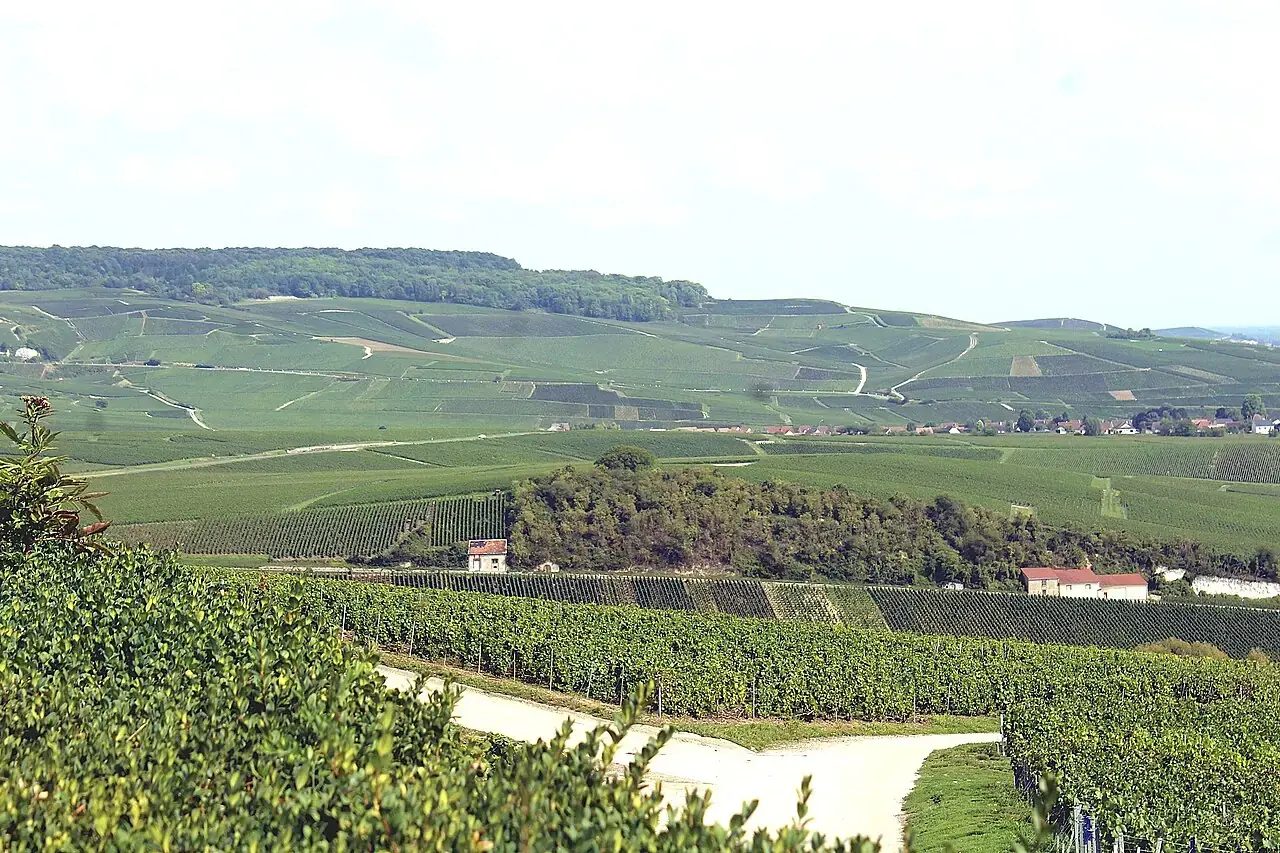
The old name Altum Villare describes Hautvillers’s elevated position: the village perched high. Its inhabitants are still known as Altavillois. The abbey and surrounding settlement look across the Marne Valley, with the forest above the vines and agricultural plain below. That vertical arrangement is central to the historic landscape recognised by UNESCO in 2015.
Saint Nivard, Archbishop of Reims, founded the Benedictine Abbey of Saint-Pierre in the seventh century. Official accounts differ over the precise year, placing it around 650 or 662. The broader date is secure; the visible buildings belong to later rebuilding. Hautvillers’s foundation belongs to the early medieval religious landscape, long before the production of the sparkling wine now associated with its name.
The abbey’s hilltop setting did not spare it repeated destruction. Union des Maisons de Champagne records attacks by the Normans in 882, English forces in 1449 and Huguenots in 1564. Those episodes explain why a history of Hautvillers is also a history of reconstruction, with religious communities returning to a site whose buildings had been damaged or lost.
Rebuilding a Benedictine monastery
Catherine de Médicis contributed to the abbey’s rebuilding in the sixteenth century. The monastic community later followed the reform associated with Saints Vanne and Hydulphe, a movement established in Lorraine in 1604. The revival preceded Dom Pérignon’s arrival and placed his work within a renewed Benedictine institution, with land and wine production supporting the community’s wider existence.
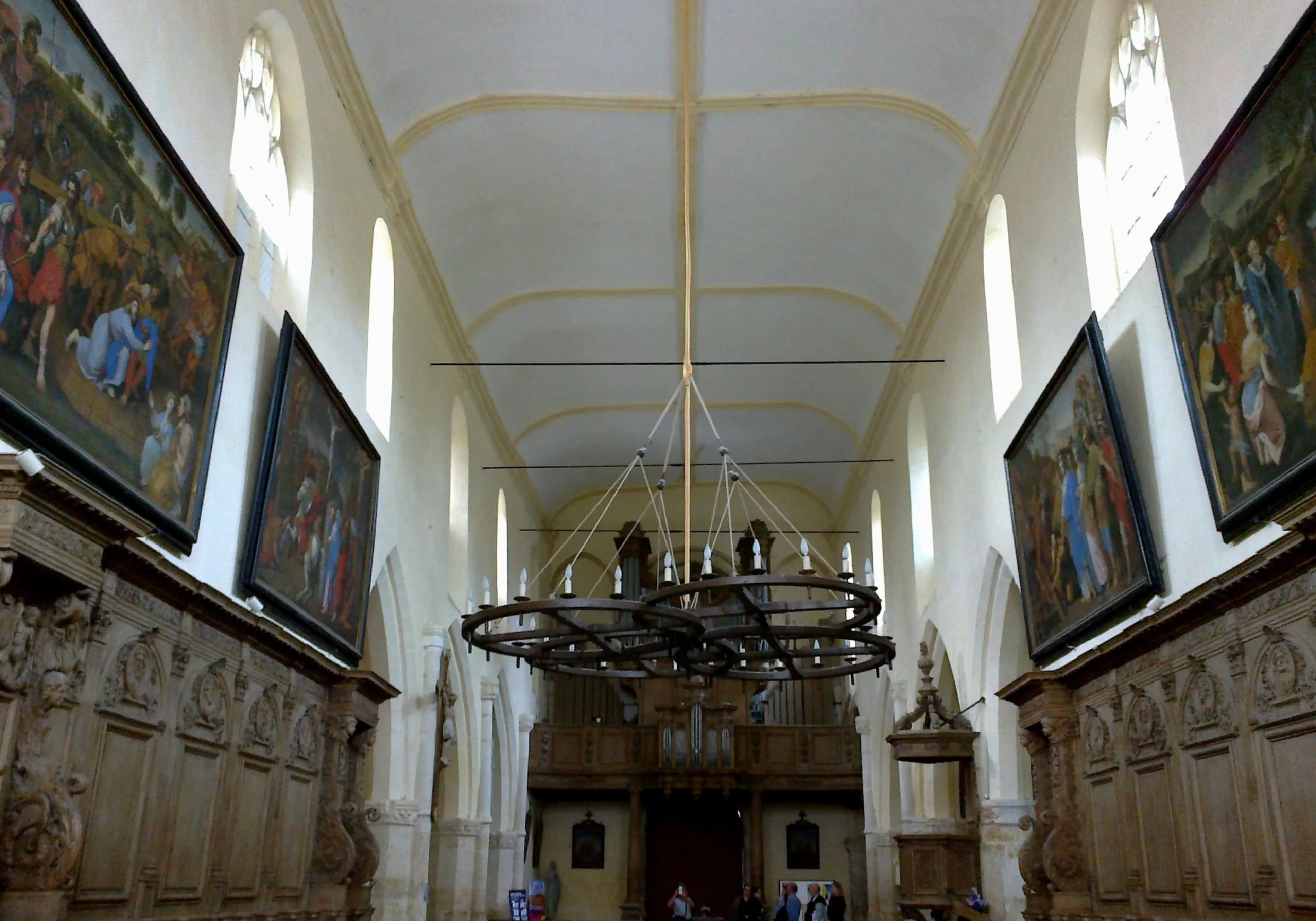
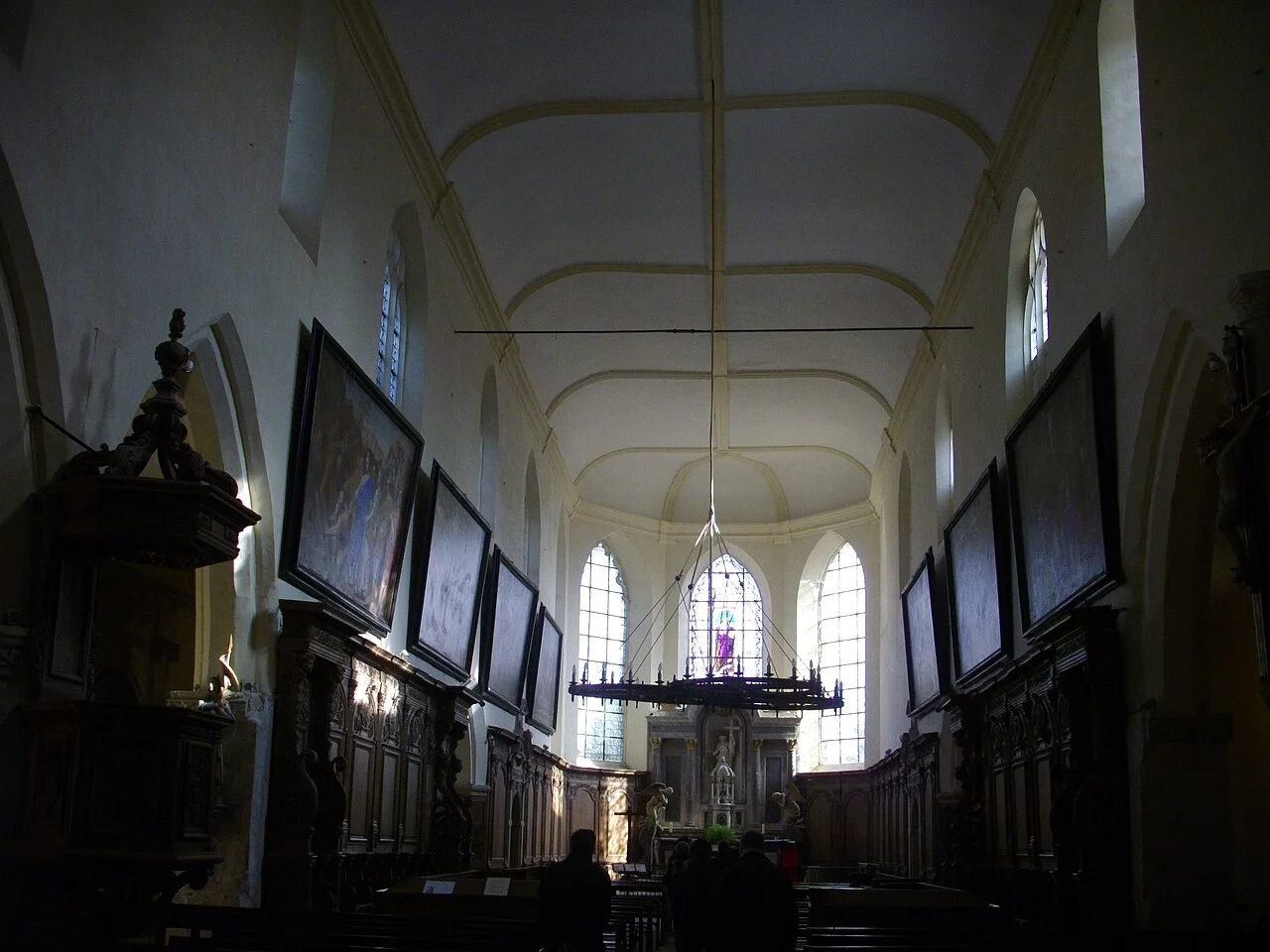
The church beside the abbey is Saint-Sindulphe. The tourist office dates much of its present fabric to the sixteenth century and its choir stalls to the seventeenth. Romanesque and Gothic elements in the façade reflect successive alterations. The church façade brings several rebuilding periods together above the site of Saint Nivard’s foundation.
Saint-Sindulphe contains relics of Saint Helena as well as Dom Pérignon’s tomb. The local heritage account describes relics taken to Saint-Leu in Paris and a portion subsequently returned to Hautvillers. The church’s religious history extends beyond wine: its objects, choir and dedication belong to the spiritual life of the monastery and village across changing political periods.

Dom Pérignon’s arrival in 1668
Dom Pierre Pérignon took up his responsibilities at Hautvillers in 1668 and remained until his death in 1715, a period of 47 years. His duties as procurator concerned the abbey’s material affairs, including vineyard management and wine production. The celebrated cellar master was consequently an administrator and estate manager as well as a skilled maker of wine.
Union des Maisons de Champagne describes him receiving responsibility for about ten hectares of poorly maintained vines and leaving an improved estate of twenty-four hectares. The figures place vineyard management at the centre of his achievement. Better land and better cultivation were part of the transformation, alongside decisions made in the press house and cellar.
The tourist office associates his careful administration with improvements to the monastery, including the Porte Sainte-Hélène and cloister. Wine income sustained buildings and religious life as well as bottles. The abbey’s reputation during the late seventeenth century grew from the combined management of land, production and trade, with Dom Pérignon responsible for those linked practical affairs.
The wines reached suppliers to the royal court and were appreciated by Louis XIV, according to the abbey’s official tourism history. That connection belongs to the reputation of Hautvillers wine during Dom Pérignon’s lifetime. It is distinct from the later luxury Champagne brand bearing his name and from modern stories about a single miraculous invention of bubbles.
Blending, pressing and the beginnings of Champagne
Comité Champagne identifies Dom Pérignon’s contribution with considered blending. Wines from different crus could complement one another, allowing the cellar master to build greater balance and quality. This was a development in wine judgement and consistency. The monk’s importance rests on improving production at Hautvillers within a wider regional transformation during the seventeenth century.
The Comité also identifies the development of gentle, fractioned pressing in the second half of the seventeenth century as an important advance. Separating juice fractions allowed white wines to be made from dark-skinned grapes. The technical history matters in a region where Pinot Noir and Meunier remain major grape varieties: pale wine from black grapes is part of Champagne’s longstanding craft.
The World Heritage mission places the transition from still to sparkling wines on the historic slopes between about 1660 and 1700. Hautvillers Abbey helped drive that process alongside other growers and religious estates. Frère Oudart at Saint-Pierre-aux-Monts Abbey in Pierry also appears in the Comité’s account, placing Dom Pérignon within a network of contributors to Champagne’s development.
Later writing enlarged the monk’s legend. The Champagne Houses association points to an 1836 memoir that helped attribute a range of innovations to him. Hautvillers’s present tourist office is explicit that his achievement was not inventing bubbles: it was the rigour brought to vineyard work and the blending of wines. That distinction preserves the impressive documented story without relying on an invented eureka moment.

Revolution, private ownership and a public church
The abbey community left in 1791 when the property was nationalised. Union des Maisons de Champagne records the complex being dismantled in 1793. The Revolution ended the Benedictine institution in which Dom Pérignon had worked, separating the village’s subsequent history from the continuous monastic life that had shaped the site for centuries.
In 1823 Pierre-Gabriel Chandon, Jean-Rémy Moët’s son-in-law, acquired the abbey and restored its vineyard estate. Hautvillers thus entered the history of the Moët & Chandon business based in Épernay. The change connected a former monastic vineyard property with the growing nineteenth-century Champagne trade and its increasingly international market.
Saint-Pierre Abbey remains private Moët & Chandon property. Saint-Sindulphe, beside it, is the public parish church containing Dom Pérignon’s grave in the choir. Those two destinations share a history but have different present uses. A visit to the church provides a connection with the monastery’s cellar master without implying entry to the private abbey or its grounds.
Saint-Sindulphe has been protected as a Historic Monument since 1983. Its surviving choir stalls, mixed architectural fabric and memorial to Dom Pérignon make it the village’s principal interior for tracing religious continuity. The church’s position alongside the abbey also makes the boundary between public remembrance and private working estate visible on the ground.
Winegrowers’ streets and surviving craft
Joseph Desruets dates its family winegrowing in Hautvillers to 1888. The estate continues to use its historic Darcq Flamain press, linking present production with an older piece of village equipment. Its premises on rue Saint-Vincent connect the press, barrel cellar and winery, carrying the production story beyond the abbey and into a family business.
The Desruets range includes still Coteaux Champenois as well as sparkling Champagne. Names such as Boujon d’Avril and Monsieur Edmond recall that the region’s wine identity is wider than bubbles alone. The producer describes indigenous yeasts and micro-cuvées matured in oak, continuing the local history through particular choices in pressing and vinification.
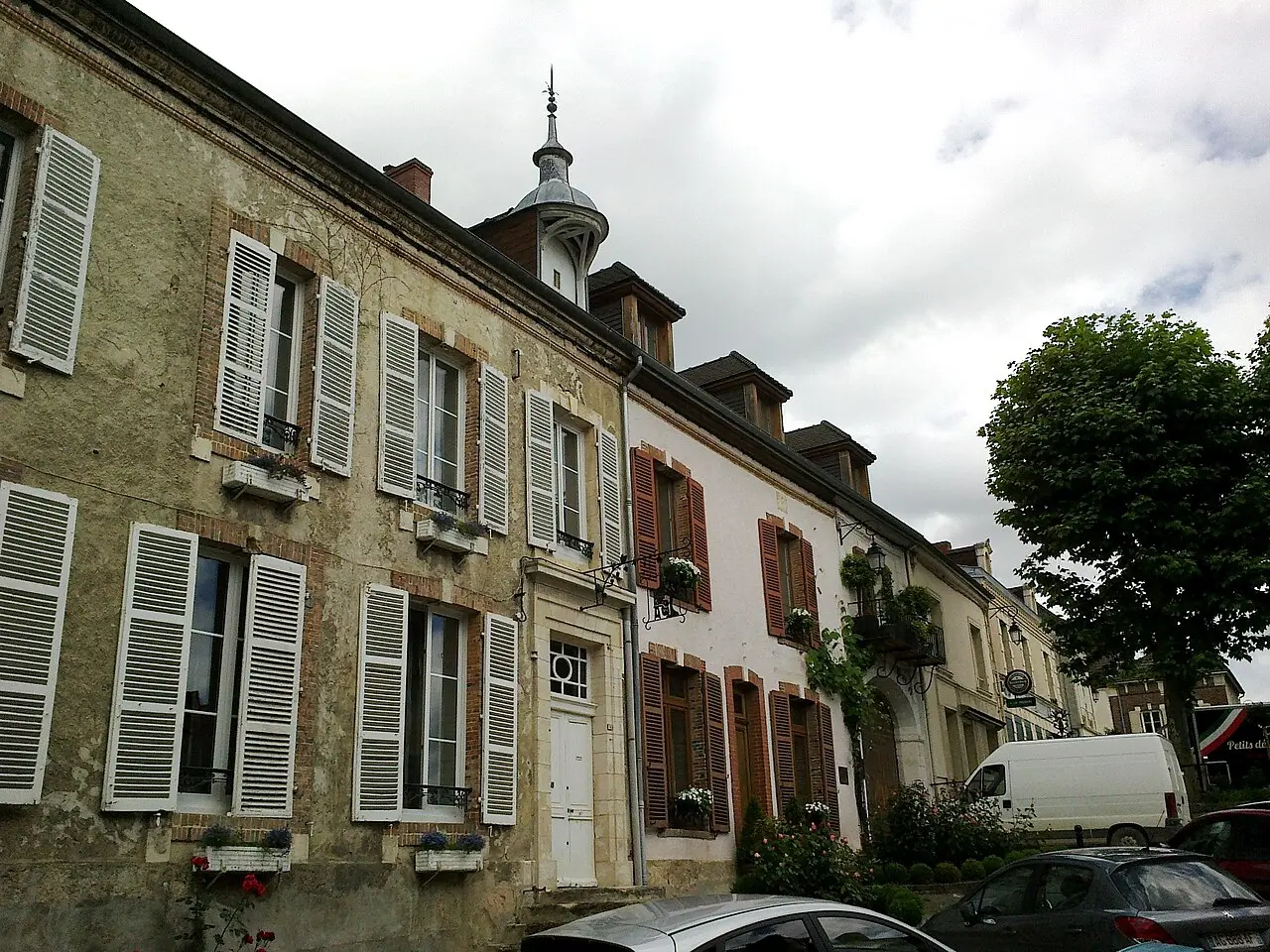
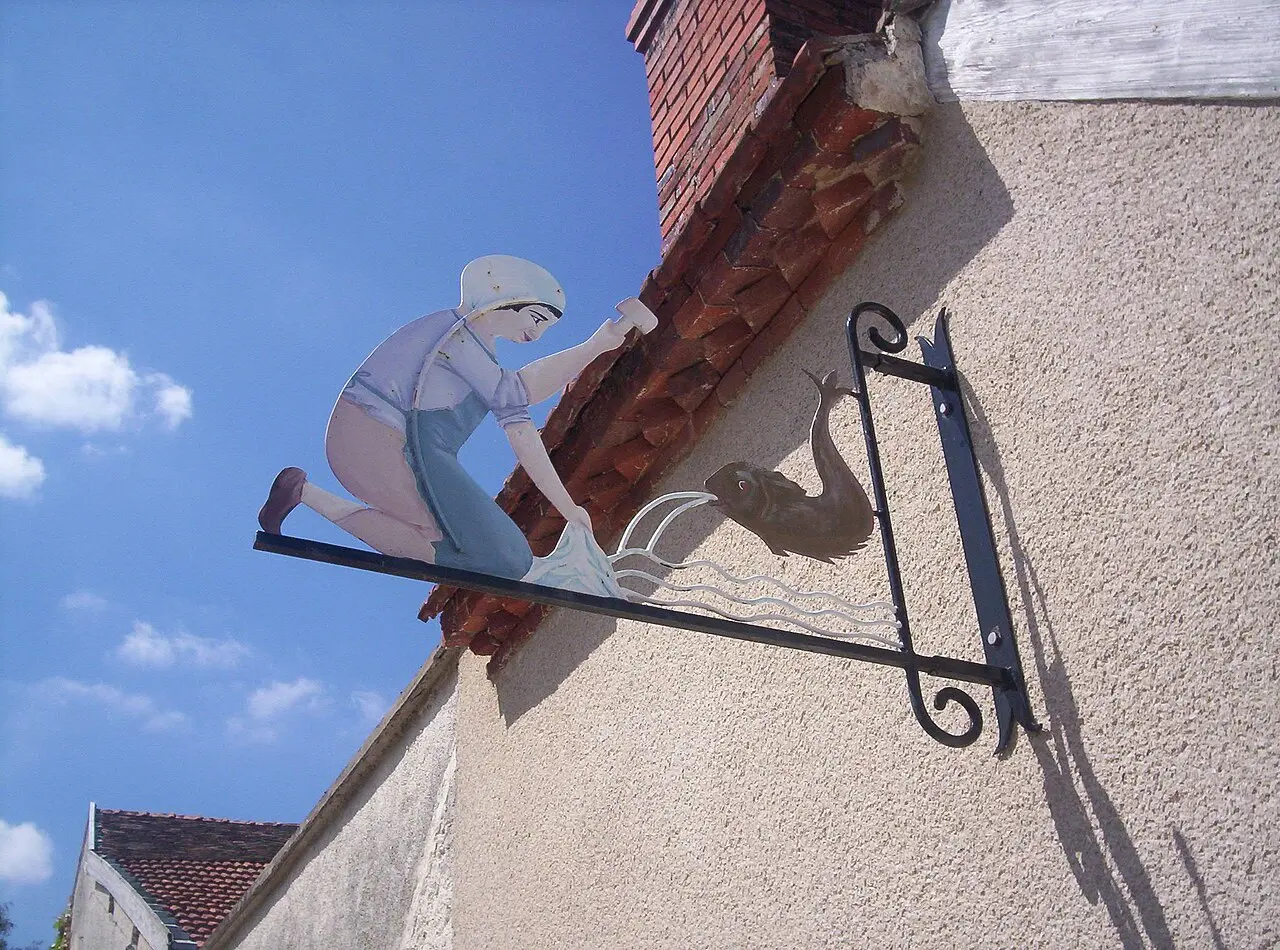
Hautvillers’s 140 wrought-iron signs bring another kind of craft into the streets. They depict occupations, interests and household identities; the tourist office’s interpreted route focuses on twenty-eight emblematic examples. The signs make the village’s human scale visible alongside the monumental abbey history, turning ordinary façades into a record of work and local identity.
The tourist office on place de la République sells publications on Hautvillers by Michel Jolyot and Aimé Adnet, alongside Vincent Pelbois’s work on Pierre Pérignon. Those named local histories provide routes into the village’s past beyond the brief interpretation at monuments. The regional park’s heritage booklet also uses old postcards and clues to connect streets with earlier views.

A landscape remembered in 2015 and 2022
UNESCO’s 2015 Champagne inscription includes the historic slopes around Hautvillers, Aÿ and Mareuil-sur-Aÿ. At Hautvillers, the World Heritage mission identifies two observation points: the Dom Pérignon panorama on rue de Cumières and Croix Joseph on the D386 towards Saint-Imoges. From these positions, the forest, vines, river and plain can be read as a connected cultural landscape.
Juan Carlos Carrillo’s bronze statue of Dom Pérignon was inaugurated in parc Pierre Cheval in June 2022. The tourist office gives its height as nearly three metres and weight as 700 kilograms. This modern memorial adds a dated artistic tribute to the much older tomb in Saint-Sindulphe, showing how the village continues to present its most famous resident.
The seventh-century foundation, the cellar mastership of 1668–1715, the Chandon acquisition in 1823 and the 2015 inscription describe successive reinventions of Hautvillers. Its surviving history includes a parish church, private wine estate, family presses and public viewpoints. The village remains both a working Champagne place and a landscape through which the region explains its beginnings.

Plan your trip to Hautvillers
Get there
Book a tour
Select the departure point and date on the booking page. Check the meeting point, language and inclusions before paying.
Compare toursWe may earn a commission if you book through these links, at no extra cost to you.