
From Augustobona to a city of fairs
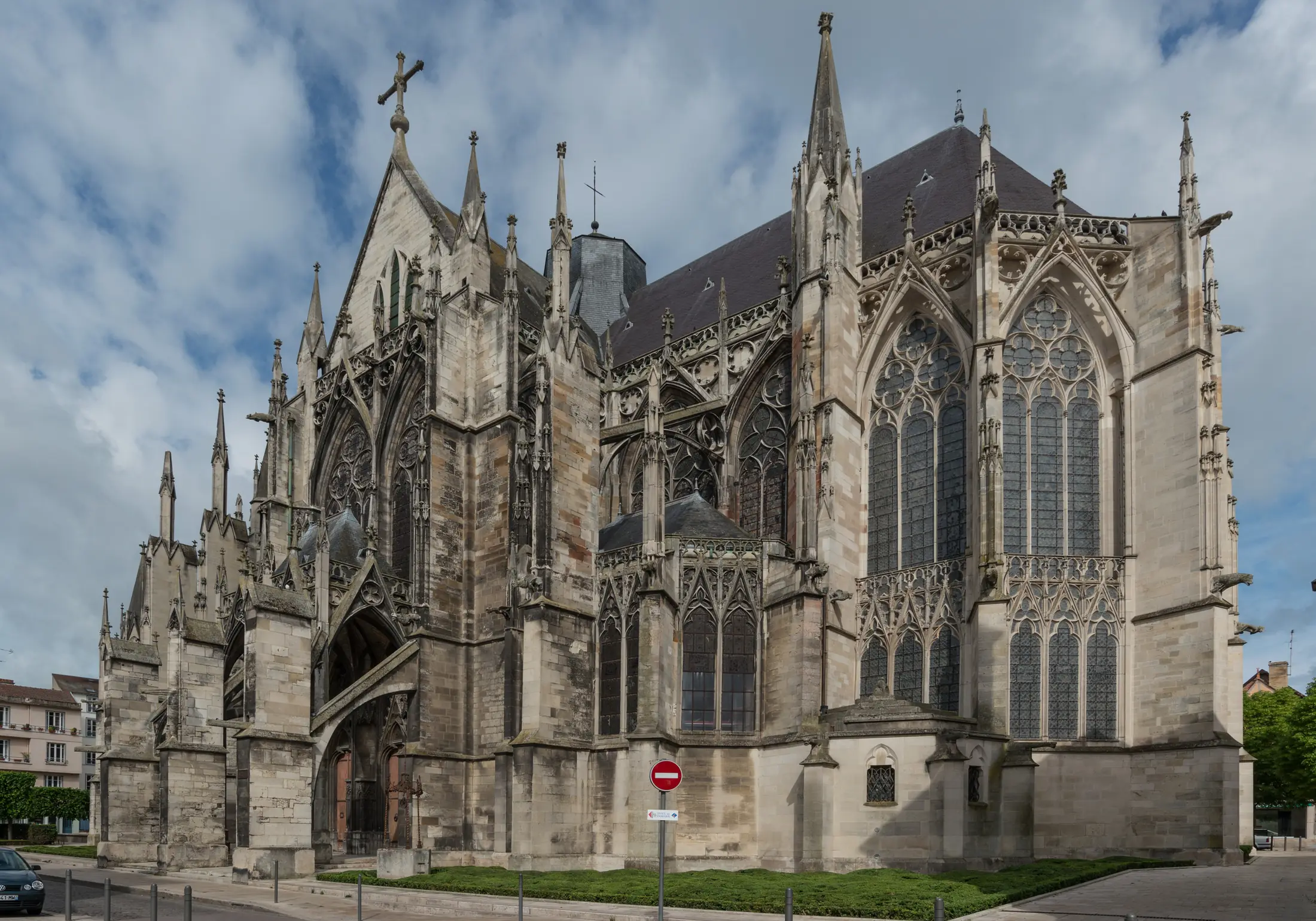
Troyes began as Augustobona, the Roman-period settlement of the Tricasses. Its position near the Seine and the Agrippa road linking Milan with Boulogne-sur-Mer made it a crossroads long before Champagne became a sparkling wine. The city’s own history connects that Roman geography with its later commercial importance. The winding streets around Saint-Jean-au-Marché preserve a different, medieval layer: a trading town organised around churches, merchants and the household of the counts of Champagne.
In the 11th century the counts had a fortified residence at Troyes. During the 12th century, new streets, neighbourhoods, an episcopal residence and the Hôtel-Dieu accompanied the city’s growth. Counts Henri I, Thibaut III and Thibaut IV feature in the municipal account of this expansion. The buildings were the infrastructure of an international market town: accommodation, religious foundations, administration and places for buying and selling developed together.
The hot fair and the cold fair
Troyes hosted two of the Champagne fairs. The Saint-Jean or “hot” fair began on 24 June; the Saint-Rémy or “cold” fair began on 1 October. The municipality places the merchants around Saint-Jean-au-Marché, whose very name records the market. Small trading premises were attached to the church. That makes this quarter a particularly revealing place to read the city’s commercial past, with a named institution anchoring streets that can otherwise look like an attractive collection of timber façades.
Cloth was central to this economy. The tourist office identifies weavers, cloth merchants, dyers and bleachers in Troyes from the 12th century. The later hosiery trade had a more specific institutional beginning: a brotherhood of bonnetiers registered its statutes in 1505. “Bonneterie” originally referred to knitted headwear and expanded to cover the trade, its products and its manufacturing premises. The textile story therefore connects medieval merchants with later workshops without making them the same industry.

The night that changed the old town
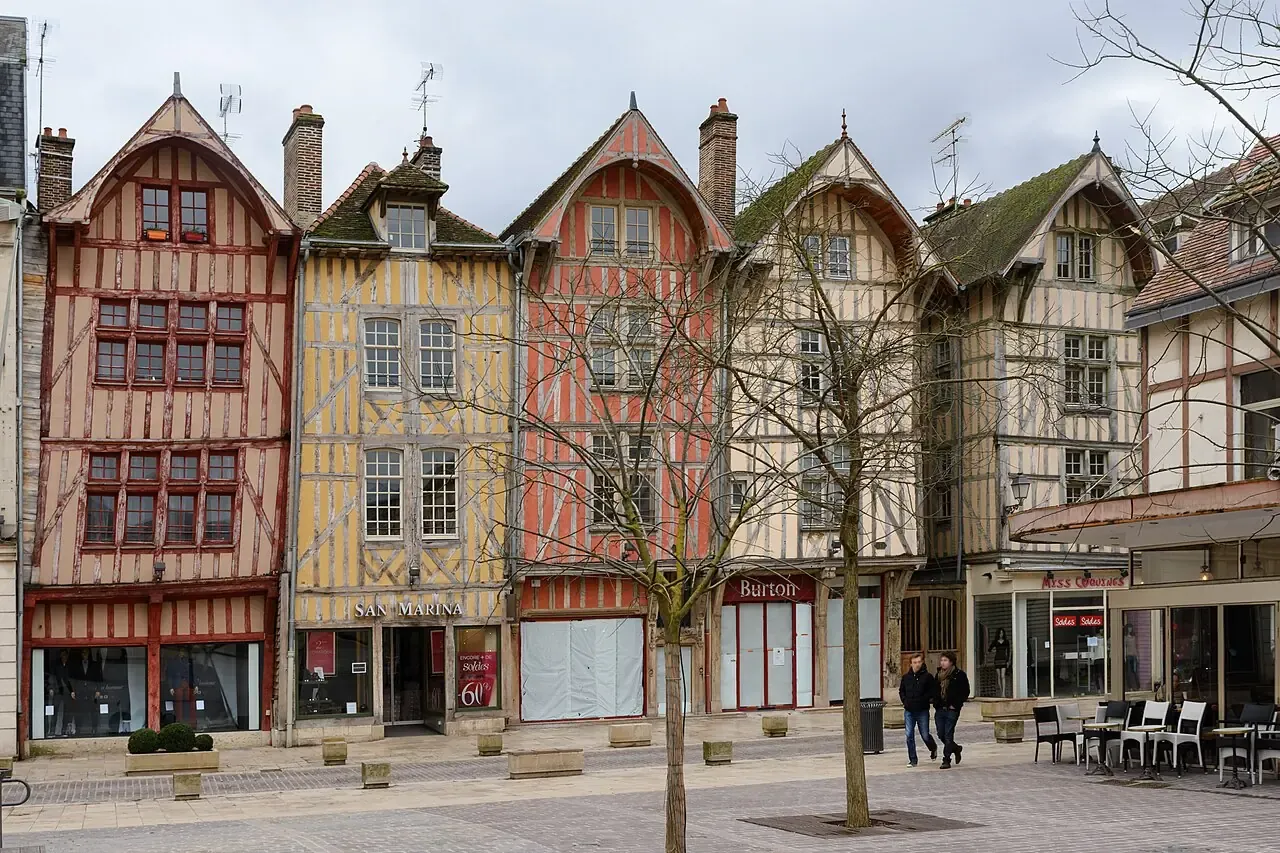
The Grand Feu broke out on the evening of 24 May 1524 in an apothecary’s house at the junction of streets now called rue Émile Zola and rue Général Saussier. The tourist office describes the destruction of roughly 1,500–1,600 houses. Saint-Nicolas and Saint-Pantaléon were destroyed, and Saint-Jean-au-Marché was badly damaged. Its account places the fire across the Croncels, Saint-Jean and Beffroy districts. The precise cause remains unknown; the name of the householder’s occupation is not proof of how the blaze started.
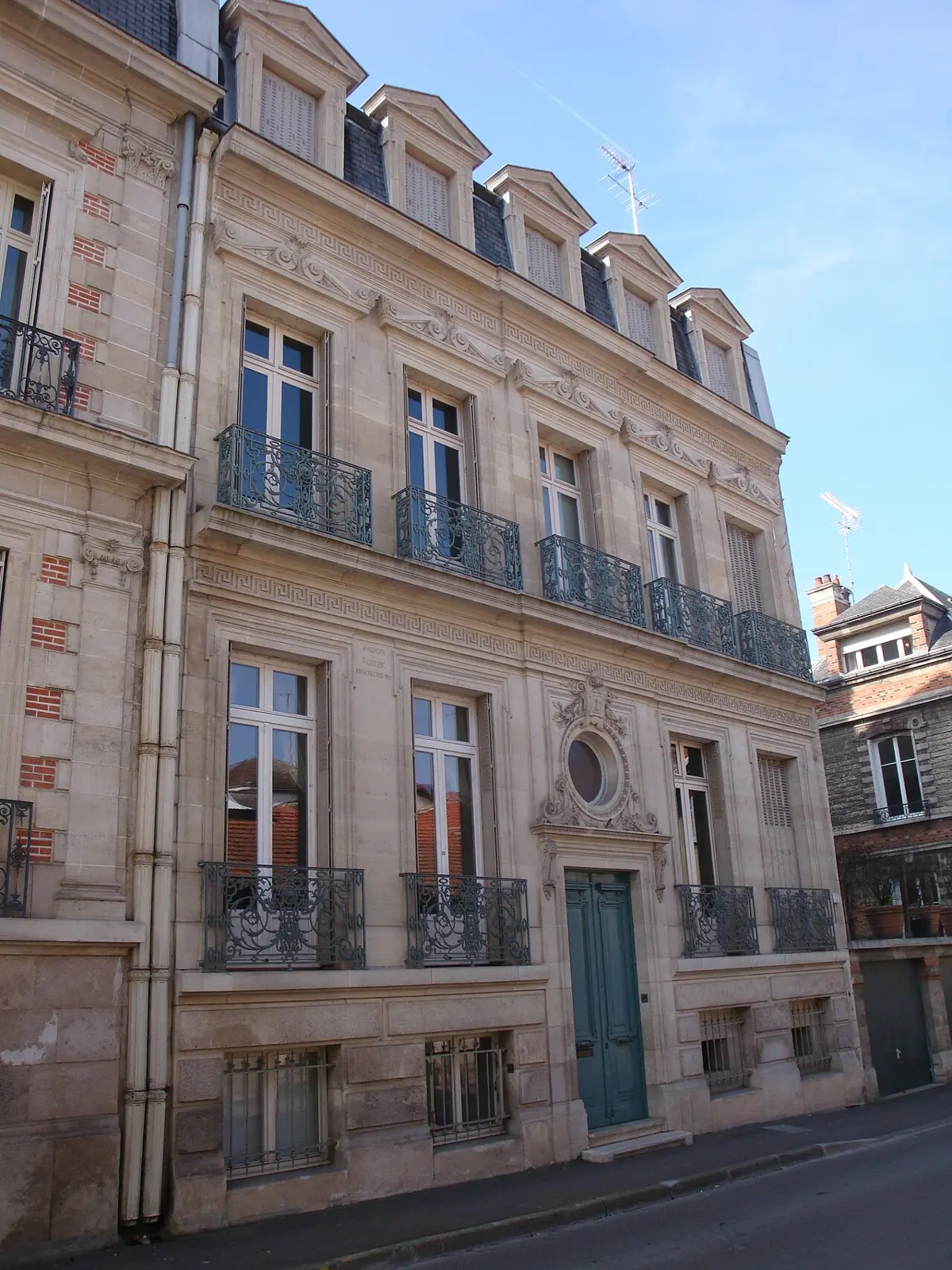
The rebuilding explains why a city famous for “medieval” streets contains so much Renaissance architecture. Oak frames and daub were rebuilt with carved corner posts, beam ends and consoles. Wealthy patrons also commissioned stone-and-brick town houses. The surviving façades around Saint-Jean-au-Marché consequently belong to several moments: medieval street patterns, 16th-century reconstruction and later conservation. The 1524 disaster is the hinge between those periods, visible in buildings as well as in the city’s written history.
Saint-Pierre-et-Saint-Paul: an unfinished ambition
Work on the present cathedral began in 1198 under Bishop Garnier de Trainel, starting with the apse chapels. The transept followed in 1260, and the first bays of the nave from 1310. Martin Chambiges’s west façade was completed in 1554. The Saint-Pierre tower was finished in 1634; its planned partner, Saint-Paul, was never built. The single-tower silhouette records the limits of a project carried forward over more than four centuries.
Inside, the cathedral measures 114 metres long and 28.5 metres high. Its approximately 1,500 square metres of stained glass include 13th-century choir windows and Linard Gonthier’s Mystic Wine Press of 1625. Furnishings add another journey through regional history: the 18th-century choir stalls and large organ came from Clairvaux Abbey. The treasury holds Bishop Hervée’s chalice, crosier and ring, alongside an 11th-century Byzantine ivory box. These are distinct objects and building campaigns, not a single collection made when the cathedral was founded.

Two churches, two extraordinary patrons
At Sainte-Madeleine, the stone rood screen separates nave from choir. Jean Gailde designed and carved it after the clergy sought a replacement for the older wooden screen around 1503. He is buried beneath his work. Originally coloured, the screen was whitened in the 18th century with the church walls. Nearby glass includes an early-16th-century Tree of Jesse and Nicolas Cordonnier’s 1506 representation of a goldsmith’s workshop. Looking between stone and glass reveals two crafts working in the same Renaissance city.
Saint-Urbain began with a very different patron. Jacques Pantaléon, the Troyes-born son of a cobbler, became Pope Urban IV in 1261 and founded the church on the site of his father’s workshop. The principal medieval building campaign ran from 1262 to 1286; completing the nave vault and western porch took another six centuries. Urban’s relics returned from Perugia in 1935. The church became a basilica in 1964, adding a modern ecclesiastical designation to its medieval architecture.
Workmanship preserved at Hôtel Mauroy
Jean Mauroy rebuilt his house in 1556 after the great fire and established an orphanage with a school teaching trades. That social purpose survives in the rue de la Trinité address and in the building’s later use. The Hôtel Mauroy became a Historic Monument in 1862. Troyes acquired it in 1966 and made it available to the Compagnons du Devoir, whose restoration prepared a home for Paul Feller’s collection of tools and books.
The Maison de l’Outil et de la Pensée Ouvrière now displays twelve thousand hand tools from the 17th to 19th centuries. Its collection changes the scale of the city’s history from façades and patrons to the implements used by working people. The Hôtel de Vauluisant provides a complementary textile collection. Together these named museums explain why Troyes’s past includes skilled labour as well as merchant wealth; the tools and hosiery displays are different collections in different buildings.

Iron markets and textile factories
Troyes’s covered Halles opened in 1874. Municipal architect Edmond Bailly drew inspiration from Victor Baltard’s Paris markets, using an iron structure beside place Saint-Rémy. The building belongs to the 19th-century city of regulated food markets and industrial materials. Its metal frame offers a useful contrast with the older oak-framed streets: Troyes’s architectural history continued after the Renaissance, even where the modern market stands close to ancient trading quarters.
The hosiery industry expanded into large factories, and the early 20th century brought names including Petit Bateau and Lacoste into the city’s industrial story. The tourist office dates the major contraction of that industry to the 1980s, when factory closures and relocation reduced employment. Factory shops and outlet centres became part of the commercial response. Troyes’s present shopping reputation therefore follows a local manufacturing history; it was not created independently of the workshops that once made the goods.
How the colour returned
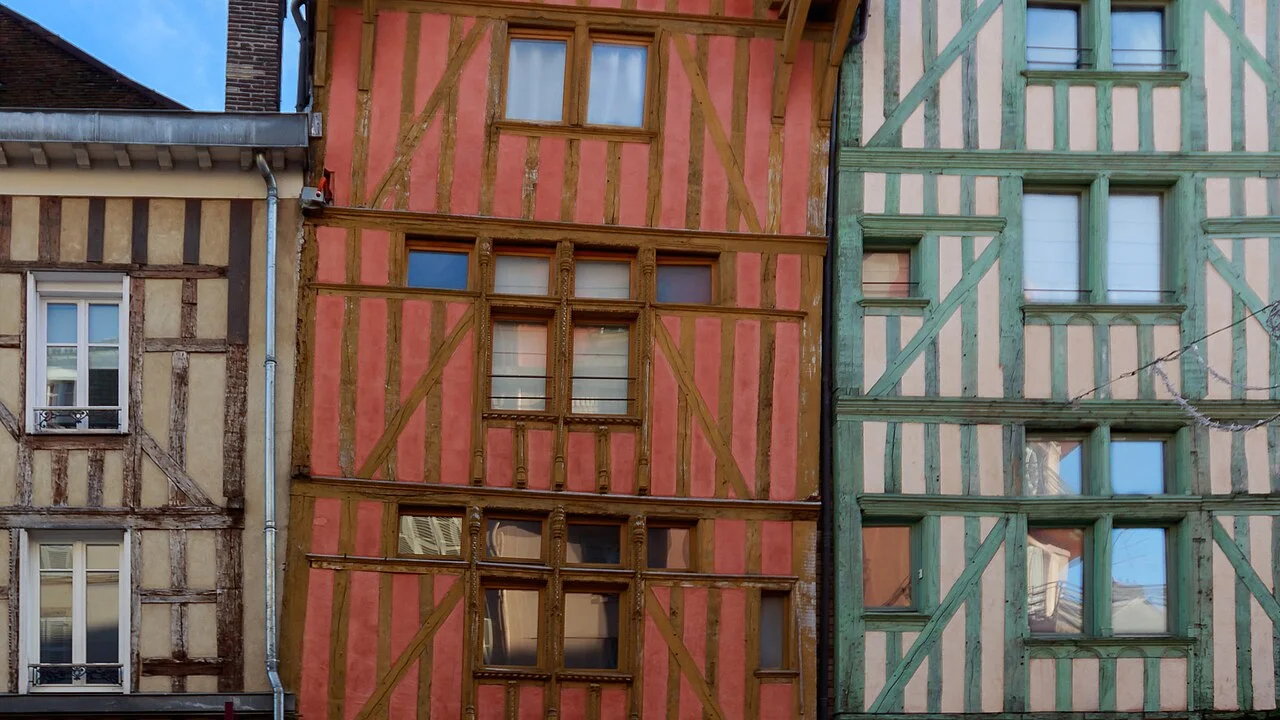
The Maison du Boulanger, at the corner of rue Paillot-de-Montabert and rue Champeaux, was the first timber-framed house restored by the city, in 1963–1964. The conservation area was defined in 1964 and extended in 1975. These dates matter because much of the bright old town visible today results from deliberate late-20th-century conservation. Its painted timber is neither an untouched medieval survival nor a recently invented street set.
A royal edict in 1667 had encouraged lime-plaster coverings as a defence against fire. Later restorers removed render and found traces of earlier colour. In 1995 Le Champ des Oiseaux, on rue Linard Gonthier, repainted its frame after pigment was discovered beneath that covering; the neighbouring Maison de Rhodes underwent related restoration. The protected historic centre now covers 137 hectares. Ruelle des Chats, the cathedral and the iron Halles sit within a city whose visible history owes as much to preservation decisions as to its original builders.

Rachi and the city of learning
Rachi was born in Troyes in 1040 and died there in 1105. His name is an acronym of Rabbi Chlomo ben Isaac. After studying at Mainz and Worms in the Rhineland, he returned to Troyes and established a school, becoming a major commentator on the Bible and Talmud. The streets around Saint-Frobert preserve the name of the medieval Jewish quarter, Broce-aux-Juifs. The exact position of Rachi’s home and synagogue is not established, according to the present Jewish community’s historical account. Maison Rachi and the European Rachi Institute now interpret that intellectual legacy, adding a history of scholarship to the more immediately visible churches and merchant houses.
Read Troyes: places to visit and trip planning guide
Plan your trip to Troyes
Get there
Book a tour
Select the departure point and date on the booking page. Check the meeting point, language and inclusions before paying.
Compare toursWe may earn a commission if you book through these links, at no extra cost to you.