
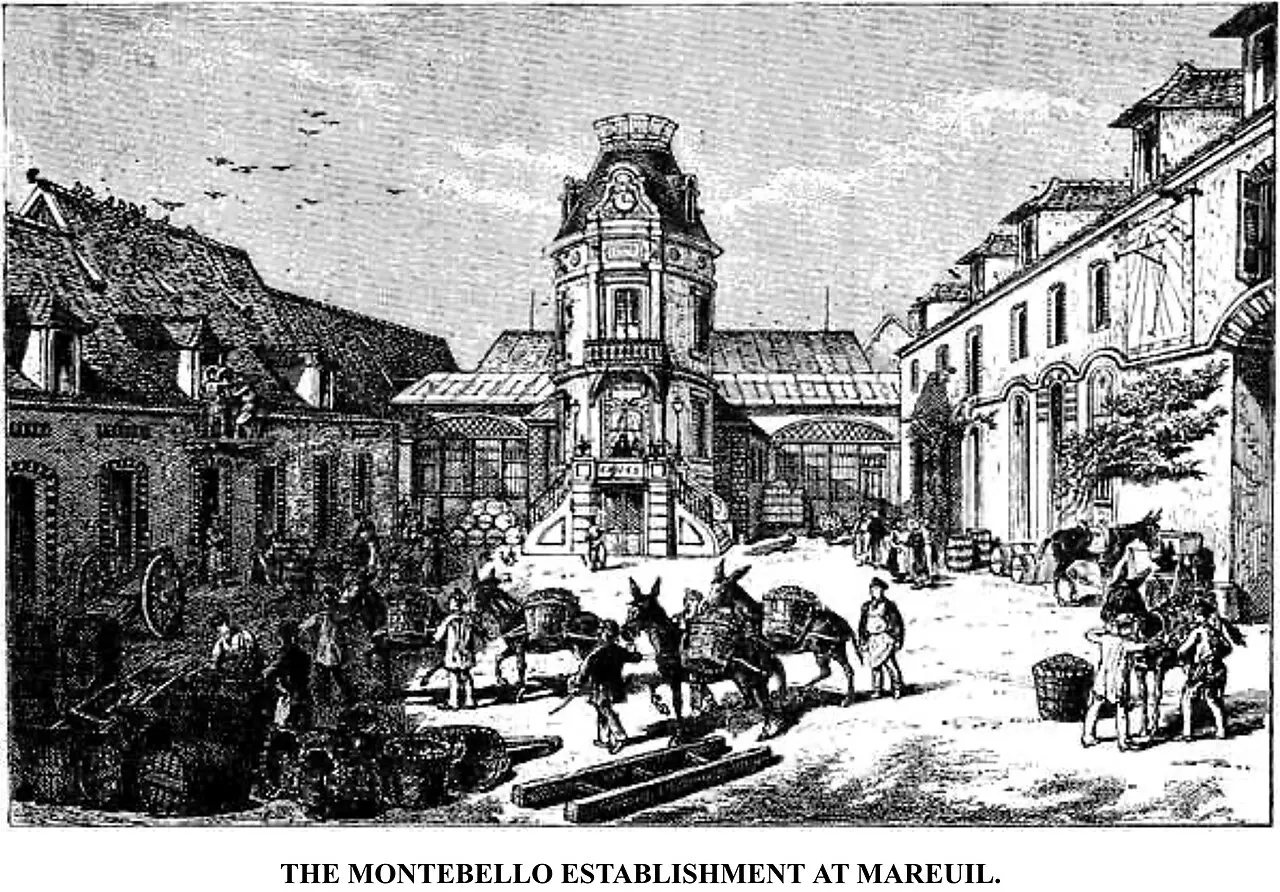

History
Billecart-Salmon began with the 1818 marriage of Nicolas François Billecart and Elisabeth Salmon in Mareuil-sur-Aÿ. Their names, and that of Elisabeth’s brother Louis, survive in three named prestige cuvées.
Nicolas François ran the commercial business while Louis Salmon concentrated on winemaking. The current family chronology identifies Mathieu Roland-Billecart as the seventh generation, following François and Antoine Roland-Billecart in the sixth. The home and estate remain at 40 rue Carnot in Mareuil-sur-Aÿ.
Jean Roland-Billecart introduced longer, lower-temperature fermentation and cold settling in 1958, drawing inspiration from brewing. The current cuverie uses small temperature-controlled tanks of forty-seven hectolitres, separating varieties and individual crus. This process developed into a continuing production method.
Cuvée Nicolas François was created in 1964 to honour the founder. The 2008 version combines 60% Pinot Noir and 40% Chardonnay, with ten years on lees. Élisabeth Salmon followed as a named vintage rosé in 1988; its 2012 edition received 115 months on lees. Louis Salmon 2012 is entirely Côte des Blancs Grand Cru Chardonnay, from Le Mesnil-sur-Oger, Cramant, Chouilly and Oiry.
The Clos Saint-Hilaire vineyard was planted with Pinot Noir in 1964. This enclosed hectare produced its first named cuvée from the 1995 harvest. It takes the name of Mareuil’s church patron saint, and its bottles are individually numbered. Published editions range from 3,500 to 7,500 bottles, with the total varying by vintage.
The estate’s chalk cellars date from the seventeenth and nineteenth centuries and extend for two kilometres. They coexist with stainless-steel tanks and oak chais. More than 400 small oak casks are documented in the current chai account.
A new chai à foudres opened in 2018 with twenty-four large oak casks of eighty hectolitres each. The same year marked the family house’s bicentenary, celebrated with 1,818 individually numbered magnums of a special cuvée. Those magnums were a limited anniversary release, while the twenty-four foudres became part of the estate’s working cellar.
Jean then developed the pale non-vintage rosé during the 1970s.
The direct-request policy at 40 rue Carnot
Use Billecart-Salmon’s own visit form within three months of your proposed date. The house says it cannot consider requests made by third parties such as travel agencies or private drivers. It prioritises professionals, loyal customers and partners, while considering reasoned enquiries from enthusiasts. Demand and private events mean that even a timely request may be declined. Policy checked October 2026.
The request page excludes children under twelve and pets. It advertises weekday visits in the October–March period and Monday–Saturday in April–October, with one visit per half-day on Saturdays; Sundays and public holidays are closed. October appears in both of Billecart-Salmon’s published seasonal ranges; give the visitor team the exact proposed Saturday and obtain its appointment reply. The form offers French, English, Spanish and Portuguese preferences without guaranteeing a particular session.

How a request becomes a confirmed booking
The official visit conditions describe an email proposing times, tasting selections and terms. Reply with your tasting choice and the number of adults and minors in the party. The house then uses Payplug to send a payment link; a payment confirmation and reservation summary follow. Prices are provided in the individual proposal, so no unverified tour price, duration or pour count is substituted here.
One hundred estate hectares and forty crus
The official vineyard account describes an estate of 100 hectares and grape sourcing across 300 hectares in forty crus. Most grapes come from within twenty kilometres of Épernay, across the Montagne de Reims, Vallée de la Marne and Côte des Blancs. These figures distinguish owned or cultivated estate land from the larger supply area; the entire 300 hectares should not be presented as the family’s own vineyard.
The cuverie concentrates on small, temperature-controlled tanks of forty-seven hectolitres. Grapes are vinified separately by cru and variety, with cold settling and low-temperature fermentation. The house dates this approach to the 1950s. The winemaking team assesses those separately vinified base wines before making the final assemblage. Their grape varieties, plots and harvest years remain identifiable during that blending work.
Small barrels, large foudres and chalk tunnels
Billecart-Salmon describes more than 400 small oak casks and twenty-four large casks in its two chais. Each parcel is vinified individually for traceability, using low-temperature oak vinification alongside stainless-steel tanks. The house chronology dates the new chai à foudres to 2018 and gives each of its twenty-four large casks an eighty-hectolitre capacity.
The chalk cellars date from the seventeenth and nineteenth centuries and extend through two kilometres of tunnels. The cellar account describes three to four years for non-vintage wines and about ten years for vintage cuvées. Individual technical sheets give more precise release-specific figures: Le Réserve’s present account, for example, states fifty months on lees. Neither the tunnel length nor ageing period establishes the distance or duration of an offered visitor route.
Le Réserve and the My Origin record
The Le Réserve name now appears on the official page whose URL still reads “brut-reserve”. Its 2020-base specification is 43% Meunier, 29% Chardonnay and 28% Pinot Noir, with more than 50% reserve wines, mainly low-temperature tank vinification and fifty months on lees. It is labelled Extra Brut. The house links My Origin for details of a particular cuvée, rather than treating those percentages as a permanent recipe.
The current Le Réserve web description and downloadable sheet differ in their count of harvest years in the blend, so that count is omitted here. Both agree on the 2020-base grape proportions, reserve-wine majority and fifty-month ageing. The house recommends serving at 8–10°C. Available formats include half-bottle, bottle, magnum, jeroboam, mathusalem and nabuchodonosor; these refer to bottle formats, not tasting sizes.
Le Blanc de Blancs and Le Sous Bois
Le Blanc de Blancs is entirely Chardonnay from four Côte des Blancs Grand Crus: Avize, Chouilly, Cramant and Le Mesnil-sur-Oger. Its technical account lists stainless-steel vinification, 20–50% reserve wines and four to five years on lees, with a recommended serving temperature of 10°C. The producer’s suggested food matches include carpaccio, ceviche and caviar. These accompany the bottle description; the visitor appointment has its own separately agreed tasting and hospitality inclusions.
Le Sous Bois is vinified entirely in oak. The current 2017-base specification gives 43% Chardonnay, 28% Pinot Noir and 29% Meunier, a reserve collection dating to 2006, five years on lees and Extra Brut dosage. Its Pinot Noir origins include the Montagne de Reims, Aÿ and Mareuil-sur-Aÿ. The technical specification supersedes the older equal-thirds description still present in a chef’s testimonial on the same page.
Nicolas François, Elisabeth Salmon and Louis Salmon
Nicolas François 2008 combines 60% Pinot Noir and 40% Chardonnay, with 17% of the wine vinified in oak, partial malolactic fermentation and ten years on lees. Its published dosage is 2.9 g/L. Named Pinot Noir villages include Aÿ, Verzenay and Mareuil-sur-Aÿ; Chardonnay comes from Côte des Blancs origins including Le Mesnil-sur-Oger, Chouilly and Cramant.
Élisabeth Salmon, created in 1988, is the named vintage rosé. Its 2012 technical sheet gives 55% Chardonnay and 45% Pinot Noir, entirely from Grand and Premier Crus, 115 months on lees and 3.8 g/L dosage. The Louis Salmon 2012 Blanc de Blancs is entirely Chardonnay: 60% Le Mesnil-sur-Oger, 23% Cramant, 11% Chouilly and 6% Oiry. A quarter is vinified in oak, with 115 months on lees and 3.9 g/L dosage.
The one-hectare Clos Saint-Hilaire
Clos Saint-Hilaire is a single enclosed hectare in Mareuil-sur-Aÿ, planted with Pinot Noir in 1964. The first cuvée came from the 1995 harvest and took the name of the village church’s patron saint. The house records annual editions of 3,500–7,500 individually numbered bottles, with production varying by vintage. Horses are used in the vineyard’s soil work.
The 2009 Clos Saint-Hilaire page specifies entirely oak-cask vinification, 177 months on lees and 1.9 g/L dosage. It describes a 4,500-bottle release and recommends serving at 12–14°C. This single-plot Blanc de Noirs is distinct from the blended Nicolas François and the Chardonnay-only Louis Salmon; a place on a house visit does not automatically include a pour of this micro-cuvée.
Food in Mareuil-sur-Aÿ
Le Bistrot at 31 rue Carnot is a named village meal stop in the Hautvillers tourist-office directory, with an eighty-seat terrace and telephone +33 3 26 52 95 61. Billecart-Salmon is at number 40 on the same street; no assumed meal service at the estate is included in this guide. The Aÿ and Mareuil guide combines the village with Philipponnat and the Marne canal; the stay guide provides local accommodation searches.
Access and facilities
Billecart-Salmon’s conditions give a full refund for cancellation at least one month before the agreed visit, 50% between one month and fifteen calendar days, and none less than fifteen days ahead. Check the terms attached to your own proposal before paying. The published visitor email is visites@champagne-billecart.fr, and the arrival address is 40 rue Carnot, 51160 Mareuil-sur-Aÿ. No complete step-free cellar specification was confirmed; include access requirements in the direct request.
Billecart-Salmon’s family home is at 40 rue Carnot in Mareuil-sur-Aÿ. Visits are considered through direct, reasoned requests from enthusiasts and clients, with priority given to professionals, loyal clients and partners. Billecart-Salmon handles visit enquiries directly; an outside tour agency cannot guarantee admission.
Plan nearby visits
Build your visit into a fuller stay with our Aÿ guide, compare tours and packages and find somewhere comfortable to stay.
Plan your trip to Mareuil-sur-Aÿ
Get there
Book a tour
Select the departure point and date on the booking page. Check the meeting point, language and inclusions before paying.
Compare toursWe may earn a commission if you book through these links, at no extra cost to you.