

History
The house’s two names come from a marriage as well as a business. Victor Canard, a barrel maker, married Léonie Duchêne, from a winegrowing family, in 1859. They founded their house in Ludes in 1868. Their sons Edmond and Alfred continued its development.
Permission to use the Russian imperial coat of arms followed in 1891. The emblem belongs to this documented commercial history. Ludes remained the house’s base, with the present entrance on rue Edmond Canard retaining the next generation’s name.
The Domaine de Ludes was acquired in 1929. Wartime destruction left its underground structures as the principal surviving historic spaces by 1955. The hand-carved 19th-century cellars cover six kilometres over four levels, descending from twelve to thirty-eight metres below ground.
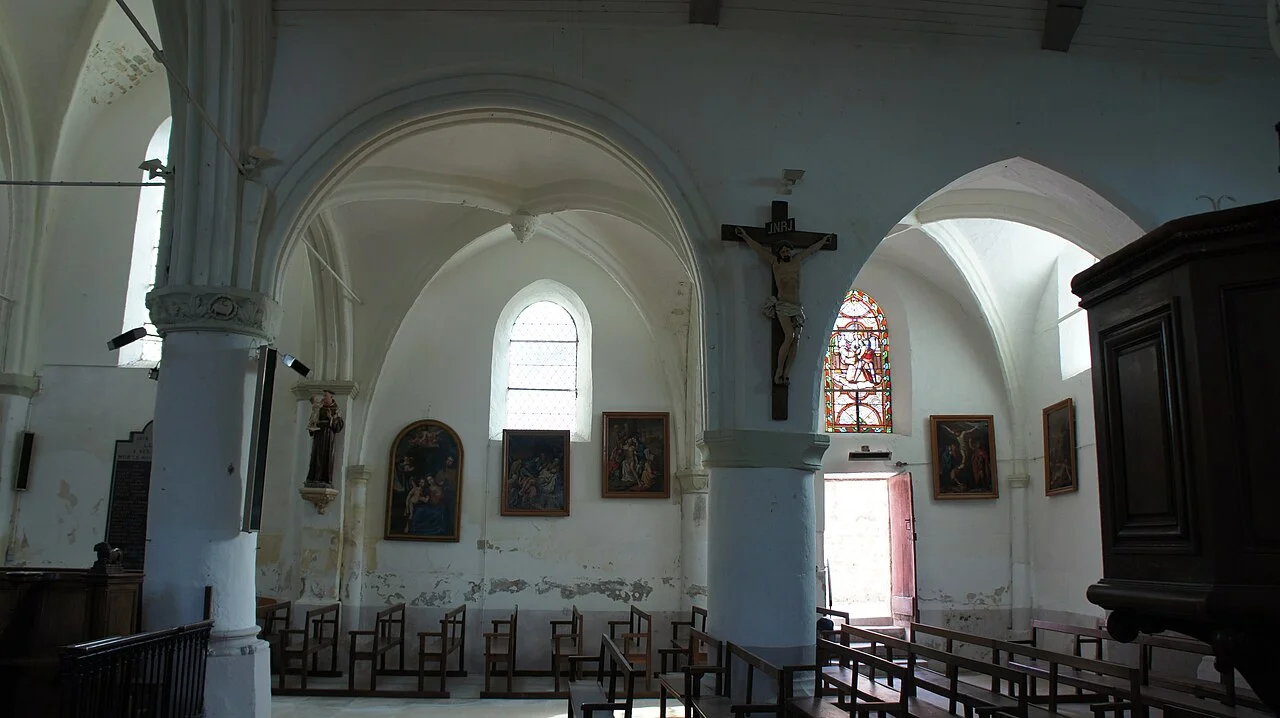
A stained-glass window from the former chapel survives on the underground visitor route. Its restoration by the Simon-Marq workshop connects the house with the history of Reims glassmaking and reconstruction. The cellar display preserves this fragment of the lost château setting.
The centenary in 1968 brought a specially shaped bottle for gastronomic cuvées. The modern Iconic range continues that bottle identity. P181, introduced in 2009, takes its name from cadastral parcel ZE 181 at Verneuil, a nine-hectare organic vineyard.
The perpetual reserve used in the Léonie range was started in 2012 and includes older wine from 2009. A separate Pinot Noir perpetual reserve also dates from 2012. The V2012 Prestige bottle records ten years of maturation and credits former cellar master Laurent Fédou for that vintage; current pages name Cynthia Fossier as cellar master.
The 150th-anniversary release in 2018 was Cuvée V Victor. The house’s Œnothèque records vintages from 1976 to 2014, providing dated examples of the wines kept in the Ludes cellar collection.
Canard-Duchêne: the place and its story
The guided route includes a stained-glass window from the former chapel, restored by the Simon-Marq workshop. Vineyard access is included when weather permits. English and French tours are listed, and a minimum of two adults is required for cellar visits.
The house closes on Mondays in January and February, and on 25 December and 1 January. Its published Sunday opening is April–September, 11:00–17:00. Boutique shopping and tastings are offered without reservation; sabrage and The Mystery of the Cellars escape game are separate activities.
The estate comprises thirty hectares of vines, nine of them organic. The house also draws on one hundred crus. Pinot Noir represents at least 30% of its blends, while a perpetual reserve begun in 2012 supports the Léonie Iconic range.
P181 is the organic Extra Brut cuvée introduced in 2009. The house chronology dates its specially shaped centenary bottle to 1968 and the Cuvée V Victor anniversary release to 2018. Current vintage listings include 2015 and 2018; the collection of older wines, the Œnothèque, spans vintages from 1976 to 2014.
P181 takes its name from cadastral parcel ZE 181 in Verneuil, a nine-hectare organically certified vineyard. Its current blend is 45% Chardonnay, 40% Meunier and 15% Pinot Noir, with 25% reserve wines. The Chardonnay is vinified in local oak barrels. The wine ages for three years in Ludes and has a 4g/l Extra Brut dosage.
Cynthia Fossier is the cellar master named on the current P181 and vintage pages. P181’s official food pairings include rack of lamb with pepperade and chorizo, breaded white asparagus with yoghurt and cumin, and corn soup with Serrano ham crisps. These published pairings describe the wine, not food included in a cellar visit.
Millésime 2015 combines 34% Meunier, 34% Chardonnay and 32% Pinot Noir. The official page gives eight years of cellar ageing and dosage below 7g/l. Its named food pairings include cod ceviche with yuzu and mango guacamole, scallop carpaccio with bergamot vinaigrette, and exotic-fruit pavlova with ginger cream.
Millésime 2018 uses a different blend: 55% Pinot Noir and 45% Chardonnay. It ages for six years in Ludes and has a 5g/l dosage. The house links the wine to an exceptionally wet autumn and winter followed by a dry, sunny summer. This is a vintage-specific account; those proportions and ageing figures do not apply to the 2015 bottle.

Léonie, Blanc de Noirs and V2012
Léonie Iconic honours the house’s co-founder. The present blend is 40% Pinot Noir, 40% Chardonnay and 20% Meunier. Reserve wines account for thirty per cent, drawn from the perpetual reserve begun in 2012 with older wine dating back to 2009. The cuvée spends at least three years in the Ludes cellars and has a dosage below 7g/l.
Blanc de Noirs Iconic is entirely Pinot Noir. Its thirty per cent reserve-wine contribution includes wine from the Pinot Noir perpetual reserve established in 2012. Like Léonie Iconic, it has at least three years of cellar ageing and dosage below 7g/l. The estate’s suggested dishes include pollack with yellow peppers and grapes, and lamb shoulder with apricot confit and spices.
V2012 Prestige is named for Victor Canard. Its blend is 75% Pinot Noir and 25% Meunier, with ten years of maturation in Ludes and no dosage. The producer’s page credits Laurent Fédou with the interpretation of this vintage. Cynthia Fossier is named on the current wine pages; the historical vintage credit and present cellar-master role refer to different stages in the wine’s life.
The V2012 page recommends king-crab and grapefruit millefeuille, tuna tartare and cheeses including Brillat-Savarin, Brie de Melun and Persillé de Tignes. These are the house’s food-pairing suggestions. The cellar booking specifies its own tasting contents; a suggested restaurant dish is not a meal included with a bottle or tour.
Tour language, groups and the cellar escape game
The house’s current cellar page lists French departures at 10:30, 14:00 and 16:30, and English at 11:30 and 15:00, subject to availability (checked October 2026). Its booking process records the chosen date, time and language. The separate group enquiry contact is visites@canard-duchene.fr or +33 3 26 61 11 60; the visitor page directs groups of fifteen or more to this team.
The Mystery of the Cellars is run with Sourire & Co. The official description gives ninety minutes to two hours and capacity up to sixty, with formats for corporate groups and private celebrations. This is a puzzle activity in the cellar setting, separate from the guided wine-tasting route. The same contact team arranges the chosen format.
The estate also offers a park picnic for groups of ten to twenty, subject to weather, by direct enquiry. Its Champagne Drive collection point is the boutique at 1 rue Edmond Canard. Orders of more than thirty bottles require at least forty-eight hours’ notice under the published 2026 collection rules. These group and collection arrangements use the estate team rather than a restaurant booking.
Montchenot for a meal; Chigny-les-Roses for a stay
Le Grand Cerf is at 50 route nationale 51 in Montchenot, within Villers-Allerand. Dominique Giraudeau and Pascal Champion lead the restaurant. Its own website names celeriac risotto with fresh truffles, blue lobster and roast milk-fed veal among its dishes; the menu selection for the meal date comes from the restaurant’s current reservation page.
The Grand Cerf’s contact page gives lunch from 12:15 to 13:30 and dinner from 19:15 to 21:00 on Monday and Thursday–Saturday; Sunday has lunch only, with Tuesday and Wednesday closed (checked October 2026). Reserve on +33 3 26 97 60 07. For seven or more, its booking form asks for an agreed single menu in advance; for more than ten, contact the restaurant directly.
Domaine du Chalet is at 24 rue du Chalet in Chigny-les-Roses. Built in 1860, it is Palmer & Co’s guest house, separate from Canard-Duchêne’s Ludes estate. Épernay Tourisme lists five rooms for up to fourteen guests, with a pool, tennis court, parking and table d’hôte. The direct number is +33 3 26 02 10 22.
The village’s official wine-trail listing names the Domaine du Chalet’s suites and table d’hôte and requires a reservation for dinner. The estate’s current room names include Soléra, Les Reflets, Les Marches du Temps, Suite Amazone and the elevated La Canopée cabin. Request the selected room and dinner through the accommodation’s booking team; a Canard-Duchêne tour ticket is a separate reservation.
Arrange your visit
Canard-Duchêne’s official visitor page provides the direct reservation or enquiry route for Ludes.
Access and facilities
Canard-Duchêne has been based in Ludes since 1868. The estate entrance is 1 rue Edmond Canard, outside Reims; the house quotes a twenty-minute drive from Reims centre. Its hand-carved nineteenth-century cellars extend for 6km across four levels, from 12m to 38m deep.
Official information
Plan nearby visits
Build your visit into a fuller stay with our Montagne de Reims guide, compare tours and packages and find somewhere comfortable to stay.
Plan your trip to Ludes
Get there
Book a tour
Select the departure point and date on the booking page. Check the meeting point, language and inclusions before paying.
Compare toursWe may earn a commission if you book through these links, at no extra cost to you.