
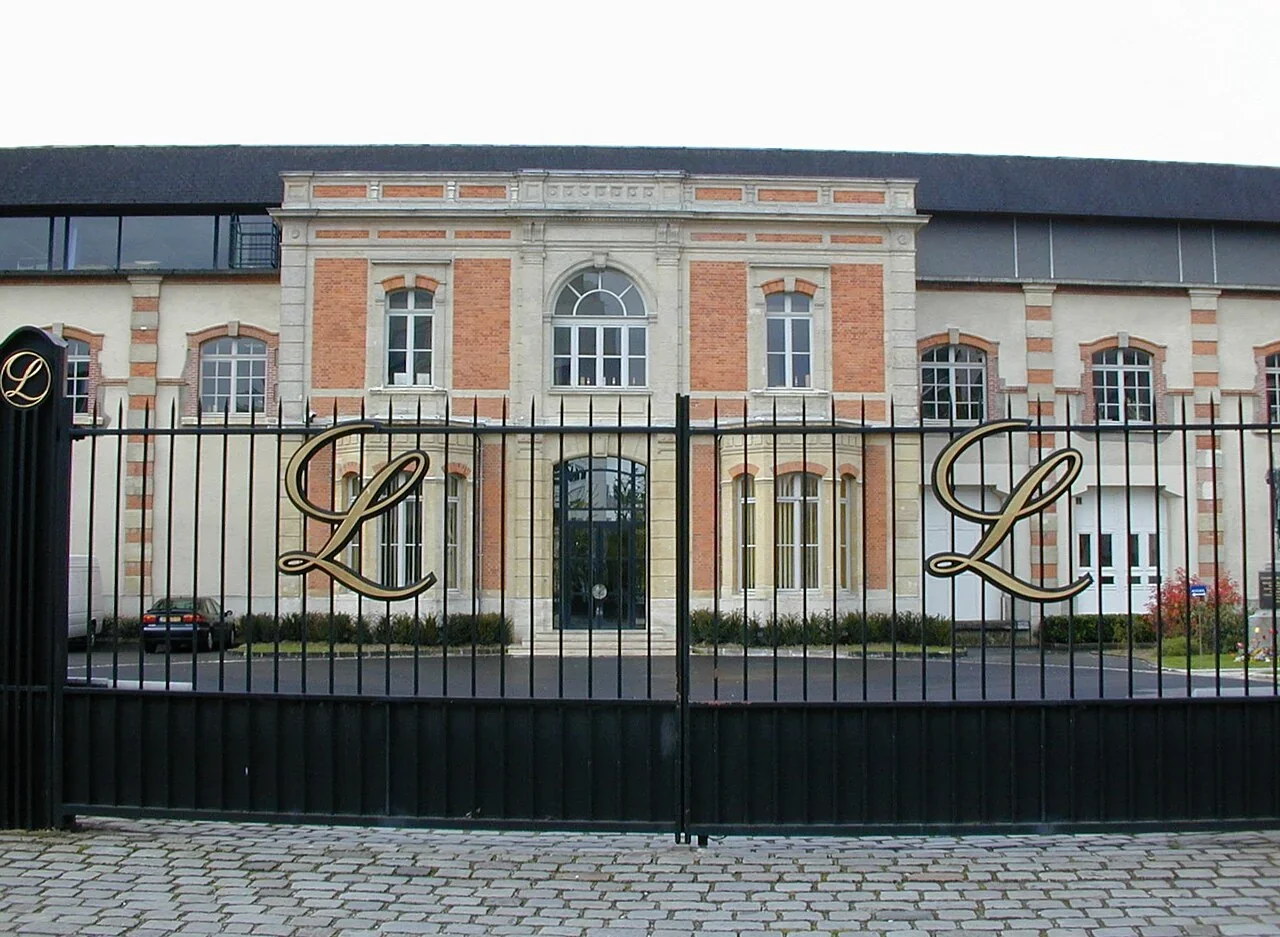

History
Lanson dates its Reims foundation to 1760. Its Maltese-cross emblem was adopted in 1798, and cellar records identify a rosé wine in 1833. Those dates precede the Black Label name now central to its public identity.
Victor Lanson introduced Black Label in 1937. In 2023, cellar master Hervé Dantan developed the name Le Black Création. The rosé became Le Rosé Création in 2024, with numbered editions referring to the successive blends since rosé became a permanent part of the range in 1952.
The modern wine specifications retain the house’s emphasis on avoiding malolactic fermentation. A perpetual reserve established in 2013 is part of its reserve-wine system. Separate village and parcel vinification, a dedicated vat room and wood-aged reserves give practical form to that continuing winemaking approach.
Queen Victoria granted Lanson a Royal Warrant on 4 December 1900. The house history follows that association through to Elizabeth II’s death in 2022. This is a historical warrant, and it is not presented as a current appointment.
Lanson’s Wimbledon partnership began in 1977. The relationship adds a British sporting connection to the older royal association, both of which form part of the brand’s documented history.
Clos Lanson is a one-hectare Chardonnay vineyard above the Reims cellars, with a view towards the cathedral. It was first vinified separately in 2006, and its first vintage was released in 2016. The enclosed urban parcel has its own wine identity within a house supplied from many Champagne crus.
The Malmaison estate’s organic development dates to 2010. Le Green Bio-Organic’s current sheet describes an eight-hectare pilot vineyard, with twenty-three plots in Verneuil and one in Vandières. Noble Champagne 2013 forms a different chapter: a prestige vintage blending Côte des Blancs Chardonnay with Montagne de Reims Pinot Noir and maturing for more than ten years.
Lanson: the place and its story
Le Black Création is the wine common to all four published tours. Emblematic Creation adds Le Rosé Création; The Signature adds Le Blanc de Blancs and Le Réserve Extra Brut. The Vintage programme specifically lists Le Vintage 2014 and Clos Lanson 2011 alongside Le Black Création.
The current child bands are 7–12 and 13–17: €15 and €20 respectively on the standard experiences, while under-sevens are free. Shop visits and tastings can be made without a cellar reservation. Private tours and the Collection Experience use the separate visitesVIP@champagnelanson.com contact.
Lanson’s supply account covers 400ha, including 60ha owned by the house and 16ha of organic and biodynamic viticulture. It draws from approximately one hundred crus, half Grand or Premier Cru. The winery has four presses near its vineyards, a parcel-by-parcel vat room and a wooden cellar for reserve wines.
The house describes its vinification as predominantly without malolactic fermentation, not an absolute ban on that process. Hervé Dantan established a perpetual reserve in 2013. Some reserves mature in stainless steel and others in oak; Le Black Création spends four years in the cellars, according to its current product account.
Clos Lanson is a one-hectare Chardonnay vineyard within historic Reims, above the house’s cellars and overlooking the cathedral. The parcel was vinified separately from 2006; its first vintage was released in 2016. The present Vintage tour specifically pours Clos Lanson 2011, whereas the vineyard’s separate retail release can differ.
Lanson acquired the Malmaison estate in 2010 and began organic farming there in that year. Its history identifies AB and Demeter certification and says Le Green Bio-Organic is made exclusively from Malmaison grapes. The cellar collection includes vintages going back to 1904; access to older bottles is through its private experiences, not the standard Original Creation ticket.
Le Réserve Extra Brut, poured on The Signature experience, blends 50% Pinot Noir, 35% Chardonnay and 15% Meunier from eighty crus. Reserves contribute at least 40%; ageing is at least five years and dosage is 5g/l. Three quarters of the wines avoid malolactic fermentation.
Le Blanc de Blancs uses only Chardonnay, drawn from at least fifteen crus. Its sources include the Côte des Blancs, Montagne de Reims, Montgueux and Vitryat. The current specification gives at least 38% reserves, at least five years of ageing and a dosage no higher than 7g/l. Like Réserve Extra Brut, 75% of the blend avoids malolactic fermentation.
Noble Champagne Blanc de Blancs Vintage 2008 is a separate prestige wine. Its Grand Cru Chardonnay origins include Avize, Cramant, Oger and Le Mesnil-sur-Oger. It is made entirely without malolactic fermentation and has a 6g/l Extra Brut dosage. Lanson recommends serving this vintage at 10–12°C in a white-wine glass, compared with 6–8°C for its non-vintage Blanc de Blancs.
The house’s chef collaborations are attached to individual wines. Beatriz Gonzalez pairs Le Blanc de Blancs with lobster marinated in green apple and wild strawberries, olive oil and caviar. René and Maxime Meilleur suggest buttered trout for Noble Blanc de Blancs 2008. These published recipes identify culinary collaborations, not meals included in the cellar tickets.
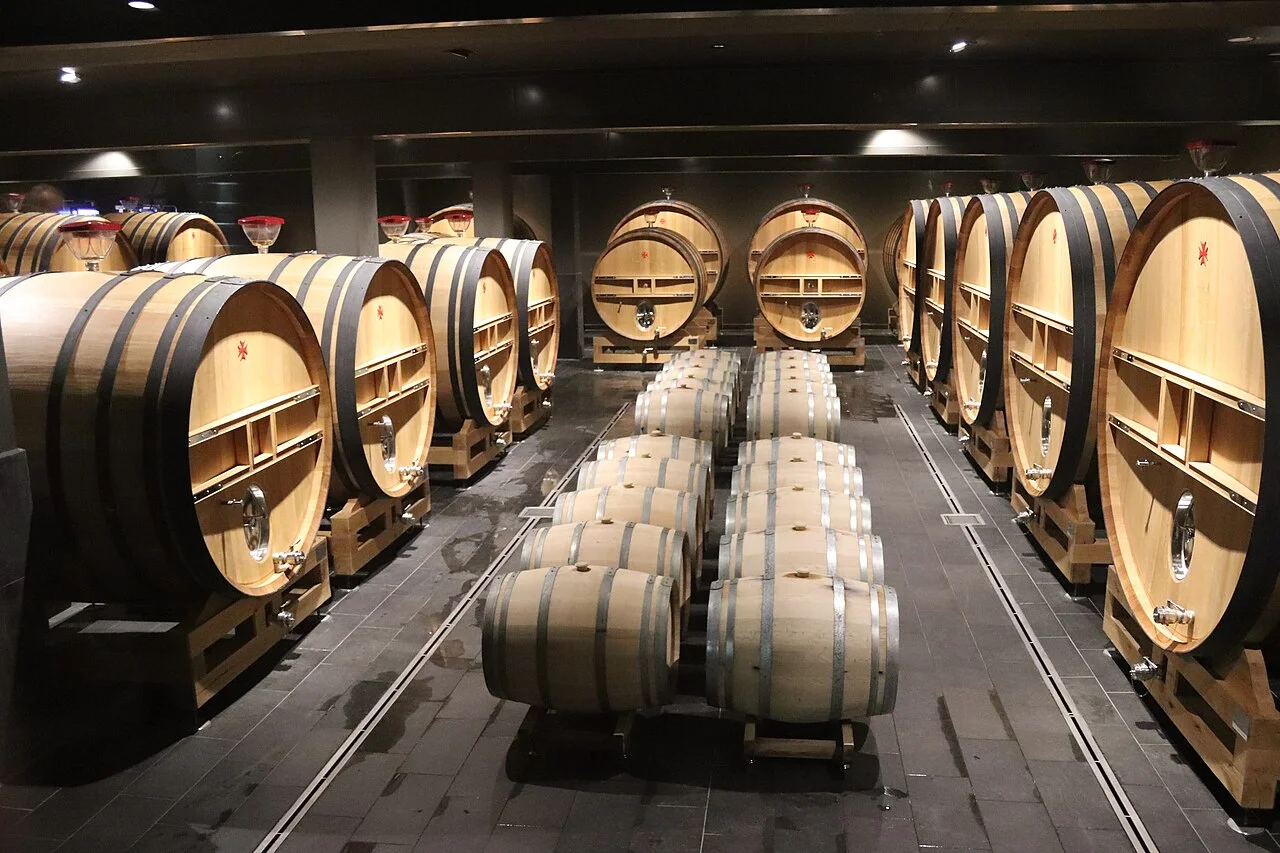

Visits and tastings
| Experience | Duration | Adult price from | Tasting | Languages | Booking |
|---|---|---|---|---|---|
| Original Creation | 90 minutes | €32 (checked October 2026) | Le Black Création | English, French | Official booking |
| Emblematic Creation | 90 minutes | €40 (checked October 2026) | Le Black Création and Le Rosé Création | English, French | Official booking |
| The Signature | 120 minutes | €55 (checked October 2026) | Le Black Création, Le Blanc de Blancs, Le Réserve Extra Brut | English, French | Official booking |
| The Vintage | 120 minutes | €85 (checked October 2026) | Le Black Création, Le Vintage 2014, Clos Lanson 2011 | English, French | Official booking |
A closer look at the Lanson range
Le Blanc de Blancs uses Chardonnay from fifteen crus across the Côte des Blancs, Montagne de Reims, Montgueux and Vitryat. Its published specification includes 38% reserve wines, at least five years of maturation and a dosage no higher than 7g/L. Lanson recommends service at 6–8°C in a white-wine glass. Chef ambassador Beatriz Gonzalez pairs this cuvée with lobster, green apple and caviar. Le Blanc de Blancs is one of the three wines named in the Signature visitor experience.
Le Réserve Extra Brut has a 50% Pinot Noir, 35% Chardonnay and 15% Meunier blend. The house draws on eighty crus and includes forty per cent reserve wines. Its five years of ageing and 5g/L dosage distinguish the published specification from the shorter-aged Black Création. Seventy-five per cent of the wines avoid malolactic fermentation. Le Réserve Extra Brut is also included in the Signature tasting, alongside Black Création and Le Blanc de Blancs, giving that two-hour programme three separately identified cuvées.
Le Rosé Création continues a permanent rosé range established in 1952. Each numbered Création counts the successive blends since that year. Hervé Dantan’s selected origins include Pinot Noir from Loches-sur-Ource, Dizy and Verzenay and Chardonnay from Trépail. Red wines include Pinot Noir from Bouzy and Les Riceys and Meunier from the Vallée de la Marne. Lanson also retains rosé reserve wines from earlier years for this blend. Chef ambassador Arto Rastas pairs it with pike-perch ceviche, salted watermelon, grapefruit and pomegranate.
Le Vintage 2014 combines 54% Pinot Noir with 46% Chardonnay. Its named Grand Cru and Premier Cru origins include Avize, Oger, Cramant, Vertus, Trépail, Le Mesnil-sur-Oger, Verzenay, Verzy, Sillery, Bouzy and Mareuil-sur-Aÿ. The house specifies ten years of ageing, 7g/L dosage and complete avoidance of malolactic fermentation. Its harvest account describes a mild, wet winter, a cool summer and a sunny September. The Vintage visitor programme pairs this 2014 wine with Black Création and Clos Lanson 2011.
Le Green Bio-Organic’s current production page identifies the 2018 harvest and the eight-hectare Domaine de la Malmaison in the Marne Valley. Fruit comes from twenty-three plots in Verneuil and one in Vandières. The blend is 46% Pinot Noir, 36% Chardonnay and 18% Meunier, with at least four years of ageing and a 5g/L extra-brut dosage. All of the wine avoids malolactic fermentation. Harvest began on 27 August 2018 after an exceptionally hot spring and summer.
Le White Label Sec provides the range’s sweeter comparison at 28g/L dosage. Its blend is 50% Pinot Noir, 35% Chardonnay and 15% Meunier, with at least 32% reserve wines and three years of maturation. The house selects from more than eighty crus and retains reserve wines over ten years old. Seventy-five per cent of its wines avoid malolactic fermentation. The word Sec appears on the bottle and corresponds here to a substantially different dosage from the 5g/L Réserve Extra Brut.
Noble Champagne 2013 is made from 70% Chardonnay and 30% Pinot Noir. Lanson names Avize, Oger and Le Mesnil-sur-Oger in the Côte des Blancs and Verzenay in the Montagne de Reims among its Grand Cru origins. Only first-press juice is used, without malolactic fermentation. The prestige wine spends more than ten years in the cellars. Its published serving range is 8–10°C, and the Meilleur chefs’ suggested pairing is shallot cooked in two ways with sorrel and burnt-pine broth.
Access and facilities
Lanson receives cellar visitors at 66 rue de Courlancy. The guided route includes the house, secret garden, winery and cellars, with the tasting determined by the named ticket. Every standard experience on the current official page is offered in French and English, in groups of 1–18.
Official information
Plan nearby visits
Build your visit into a fuller stay with our Reims guide, compare tours and packages and find somewhere comfortable to stay.
Plan your trip to Reims
Get there
Book a tour
Select the departure point and date on the booking page. Check the meeting point, language and inclusions before paying.
Compare toursWe may earn a commission if you book through these links, at no extra cost to you.
From Reims cathedral to the visitor address
Notre-Dame Cathedral to the house: about 2.2 km, 30 minutes walking. Open this OpenStreetMap route.