

History
Apvril Le Philipponnat came from Fribourg in Switzerland and served François I as a captain during the Italian wars. He settled in Champagne and married Marie d’Ambonnay. Official records mention his Le Léon vineyard at Aÿ in 1522; the house still cultivates vines there. Sixteen generations link that early record with the present wines. He owned vineyards in Aÿ and Mareuil.
The coat of arms was entered in the Armorial de France in 1696 and remains on Philipponnat bottles. Auguste and Pierre Philipponnat founded the modern company in 1910 and acquired the Château de Mareuil cellars. The visitor estate is now at 13 rue du Pont, with historic chalk tunnels described as eighteenth-century cellars.
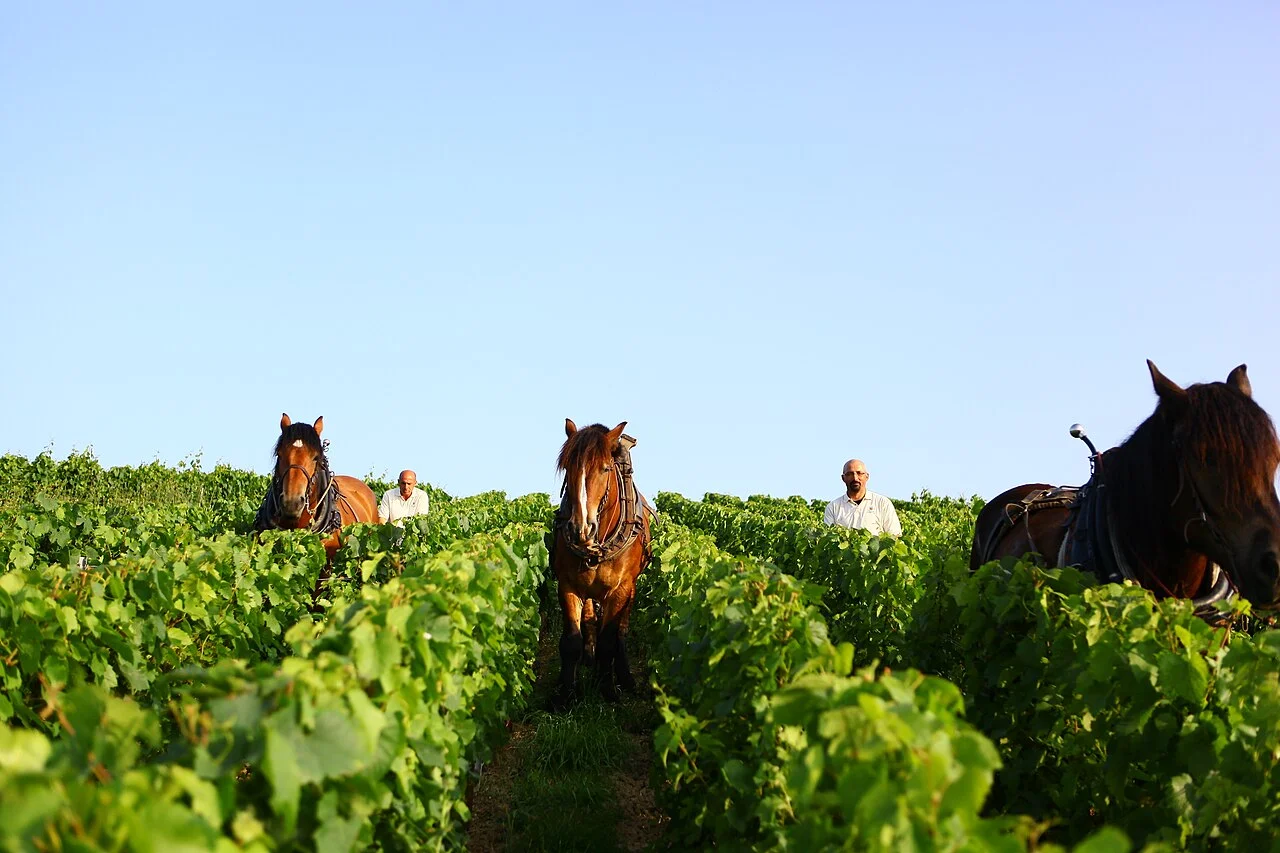
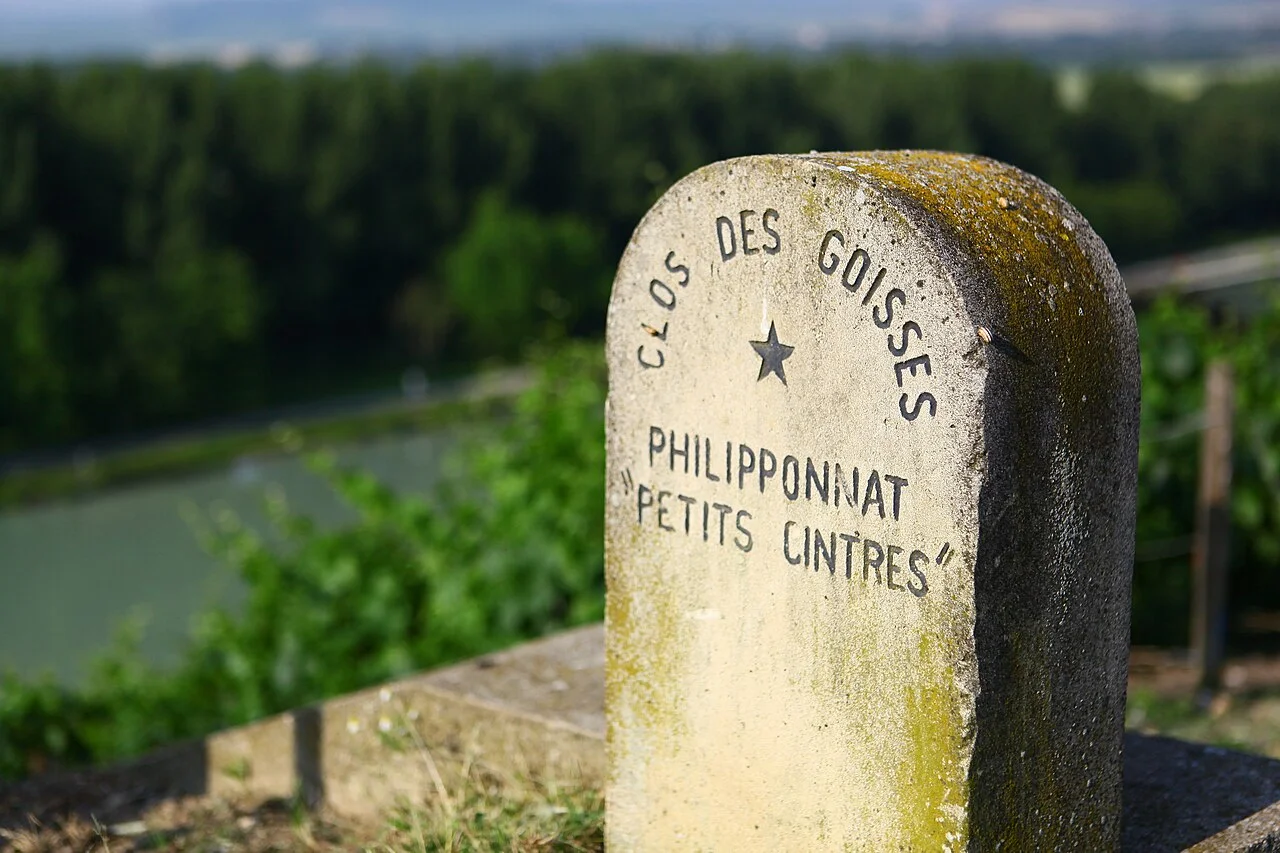
Pierre Philipponnat bought Clos des Goisses in 1935 after recognising the potential of its neglected slope. The walled vineyard covers 5.83 hectares, divided into fourteen plots, facing south above the Marne canal. Its slope varies from thirty-five to forty-five degrees, with chalk close to the surface.
The house describes Clos des Goisses as its earliest parcel-specific approach. A vintage has been made every year since 1988, although strict selection rarely uses more than half the site’s theoretical output. Its general production account specifies mainly wood vinification without malolactic fermentation, nine to eleven years’ cellar ageing and low dosage.
The Réserve Perpétuelle cycle began in 1946. Each new blend incorporates part of its predecessor, while a portion is retained for later years. The slower-turning Réserve Essentielle receives another share. Both reserves age in wood, linking successive harvests through repeated blending.
The 1522 cuvées take their name from the early family vineyard record. An old engraving of Aÿ appears on the Blanc label, and its blend centres on Le Léon Pinot Noir with other Grand Crus, generally Mailly and Le Mesnil-sur-Oger. The current range account gives six to eight years of cellar ageing. It is a modern wine commemorating the family’s documented origins, not a claim that sparkling Champagne was made in 1522.
Mareuil-sur-Aÿ: the address, booking and languages
The house gives Mareuil-sur-Aÿ as six kilometres from Épernay and thirty kilometres from Reims. Its address is 13 rue du Pont, 51160 Aÿ-Champagne, telephone +33 3 26 56 93 00 and email contact@philipponnat.com. Every visit requires advance booking. The official form requests your preferred date, time slot, party size and experience, together with contact details; await confirmation of the selected programme.

The Mysteries of Champagne: ninety minutes, four cuvées
The Mysteries of Champagne is advertised year-round and lasts ninety minutes. Its programme covers the house’s history, the Champagne-making process, the cellars and a comparative tasting of four cuvées. Unlike the two-hour Origins and Clos des Goisses descriptions, this programme does not include a named vineyard walk in its published itinerary. No current price or list of the four bottles was exposed on the official page reviewed in October 2026.
Request The Mysteries of Champagne for the shorter published cellar programme. Send Philipponnat the requested date, guide language and named experience; the visitor team’s reply supplies the tasting selection and payable price for that appointment. The ninety-minute duration and four-cuvée count belong to this named experience; they should not be applied automatically to a private event, cruise or blending workshop.
The Origins: two hours with 1522 Grand Cru
The Origins lasts two hours and is advertised year-round. The programme includes a walk towards the historic Clos des Goisses vineyard, house history, the production process and the cellar tour. Its guided tasting comprises five cuvées: 1522 Grand Cru alongside four other wines showing the house style. The official page confirms the named 1522 inclusion without promising one specific vintage.
Request The Origins through the house. The programme’s link between the 1522 name and the family history is explicit: it refers to early records of Apvril Le Philipponnat in Aÿ. This tour and the Clos des Goisses tour have the same two-hour duration and five-wine count, but different named centrepieces in the tasting.
Clos des Goisses: a five-cuvée tasting
The Clos des Goisses experience also lasts two hours, with year-round availability by appointment. It includes the vineyard approach, winery, historic cellars and a guided tasting of Clos des Goisses alongside four other cuvées. The precise route depends on the programme and conditions at the time, according to the house’s visitor FAQ. Access to a vineyard is not implied outside a confirmed visit.
Request the Clos des Goisses experience to include that named wine. The published programme does not expose a verified current admission price, and the vintage served is not specified. Keep its booking confirmation separate from a request for The Origins: the latter names 1522 Grand Cru as its featured cuvée instead.
The blending workshop and the canal cruise
The Art of Blending adds five vins clairs, the house’s perpetual reserve and four finished cuvées to the vineyard, vat-room and cellar sequence. Vins clairs are still base wines tasted before Champagne’s second fermentation. The page’s heading says February–March while another line says January–March. The official seasonal ranges overlap and use different start months. Give Philipponnat the exact proposed day so its visitor team can offer the available appointment. Ask about The Art of Blending.
Along the Marne is a cruise aboard Bullet 1927 on the Canal Latéral à la Marne, with a food-and-Champagne pairing prepared by the Royal Champagne hotel’s chef. An estate visit and signature tastings may be added. Its official page gives conflicting May–October and April–September seasons; the timetable, duration and price therefore require direct confirmation. Enquire about Along the Marne rather than assuming it is a daily scheduled boat service.
1522, 1696 and the Mareuil cellars
The family coat of arms was registered in the Armorial de France in 1696 and remains on the bottles. The current estate comprises twenty hectares of Premier and Grand Cru vineyards, supplemented by grower relationships. Philipponnat describes the visitor tunnels as eighteenth-century chalk cellars. The Gallo-Roman crayères on Reims’s Saint-Nicaise Hill belong to a different architectural history and visitor circuit.
Clos des Goisses: fourteen plots and a south-facing slope
Pierre Philipponnat acquired Clos des Goisses in 1935. The current estate account divides its almost six hectares into fourteen plots and gives slopes of 35–45 degrees. The range page supplies the more precise area, 5.83 hectares. Its south-facing exposure overlooks the Marne canal, with chalk close to the surface on the eroded hillside. Degrees describe an angle here; a 45-degree slope should not be rewritten as a 45% gradient.
Clos des Goisses is always vintage-dated, mainly vinified in wood without malolactic fermentation and aged for nine to eleven years, with 4 g/L dosage in the general vineyard account. The house says a vintage has been produced annually since 1988, although strict selection rarely uses more than half the vineyard’s theoretical potential. Juste Rosé is a separate expression using rosé de saignée and described with ten years of ageing.
The reserve cycle begun in 1946
Philipponnat uses only the first pressing, the cuvée, in its production account. Since 1946, it has blended part of the previous year’s blend with the new harvest, retaining a portion again for future years. The process feeds both Réserve Perpétuelle and the slower-turning Réserve Essentielle. Both reserve systems age in wood. The house adjusts whether malolactic fermentation takes place according to the cuvée and vintage.
The current range calls its main non-vintage wines Réserve Perpétuelle Brut and Non Dosé. Brut receives three to four years on lees in bottle; Non Dosé has no sugar added in the dosage. These current labels matter when matching a bottle or enquiry to older Royale Réserve references. The rosé range combines first-press grapes with a small addition of red Champagne wine and wood-aged reserves.
What the 1522 bottle represents
1522 Blanc combines Pinot Noir from Le Léon in Aÿ with other Grand Cru sources, generally Mailly and Le Mesnil-sur-Oger. The range account specifies predominantly wood vinification without malolactic fermentation, six to eight years’ cellar ageing and Extra Brut dosage of 4 g/L. An old engraving of Aÿ decorates the label. 1522 Rosé is described separately as Premier Cru, using red Mareuil wine or rosé de saignée from Clos des Goisses.
A meal on rue Carnot
Le Bistrot at 31 rue Carnot is listed by the local tourist office with an eighty-seat terrace and telephone +33 3 26 52 95 61. It supplies a named Mareuil food stop for a cellar day; it is separate from the chef’s pairing on Bullet 1927. The Aÿ and Mareuil guide adds Billecart-Salmon at 40 rue Carnot and canal-side planning, while the accommodation guide provides local stay searches.
Access and facilities
Philipponnat says all tours may be conducted in French, English or Italian: state your preference when requesting a place. The estate introduction mentions narrow staircases, vineyard terraces and eighteenth-century chalk cellars. No complete wheelchair specification or lift route was confirmed. Describe any mobility requirements to the visitor team before paying, particularly for a programme involving the steep Clos des Goisses hillside.
Philipponnat receives visitors by appointment at 13 rue du Pont in Mareuil-sur-Aÿ. Its current programmes include a ninety-minute four-cuvée visit and two-hour experiences with five cuvées. The house’s defining vineyard, Clos des Goisses, covers 5.83 hectares above the Marne canal.
Plan nearby visits
Build your visit into a fuller stay with our Aÿ guide, compare tours and packages and find somewhere comfortable to stay.
Plan your trip to Mareuil-sur-Aÿ
Get there
Book a tour
Select the departure point and date on the booking page. Check the meeting point, language and inclusions before paying.
Compare toursWe may earn a commission if you book through these links, at no extra cost to you.