

History
Philippe Clicquot established the wine business in 1772. Barbe-Nicole Clicquot Ponsardin took control in 1805 following François Clicquot’s death, aged twenty-seven. The widow’s title, Veuve, became part of the house name.
The official chronology dates the development of vintage Champagne to 1810. In 1818, Madame Clicquot created the first known blended rosé Champagne. Red wine blended with a white base remains the principle behind the house’s Brut Rosé.
The modern Rosé Assemblage programme links that history to two separate wines, Brut Rosé and Vintage Rosé 2015. La Grande Dame Rosé 2018 also draws on the blended method: its specification identifies red Pinot Noir from Clos Colin in Bouzy. The historical innovation therefore appears across several labels.
The house’s published reserve collection contains four hundred wines, with some retained for up to thirty years. Yellow Label can contain as much as forty-five per cent reserve wine, making stored harvests part of the continuity of its non-vintage style.
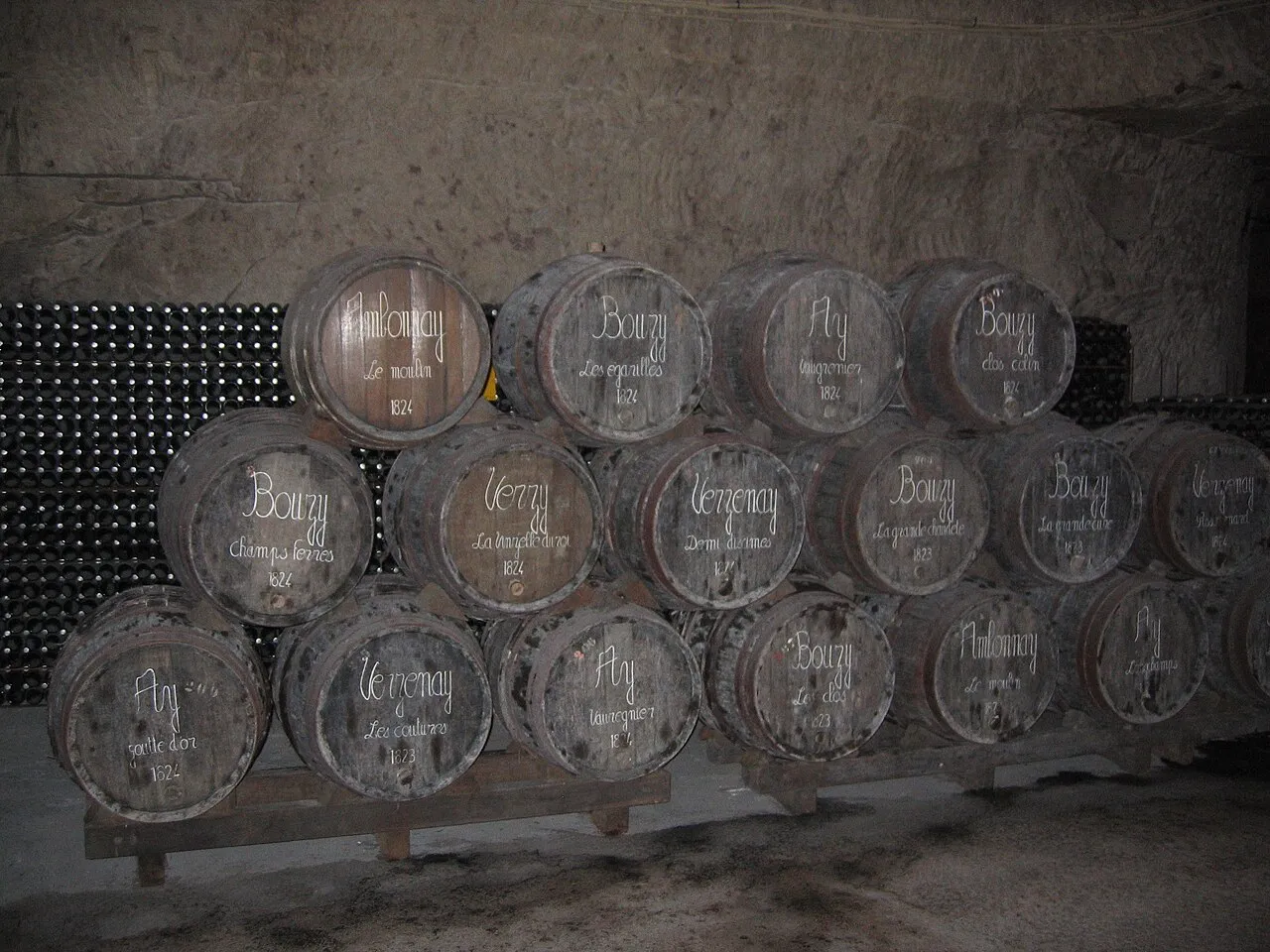
Extra Brut Extra Old began in 2017 as a wine made entirely from reserves. The first edition combined Cramant 1988, Aube 1996, Verzy 2006, Villers-Marmery 2008, Aÿ 2009 and Ville-Dommange 2010. Its fifth edition uses seven reserve years spanning 1996 to 2015. Edition numbers identify successive blends within this collection.
La Grande Dame 2018 is the twenty-fifth vintage of the prestige cuvée. Its ninety per cent Pinot Noir and ten per cent Chardonnay blend continues the house’s emphasis on Pinot Noir. Didier Mariotti is the cellar master named on the current official product page.
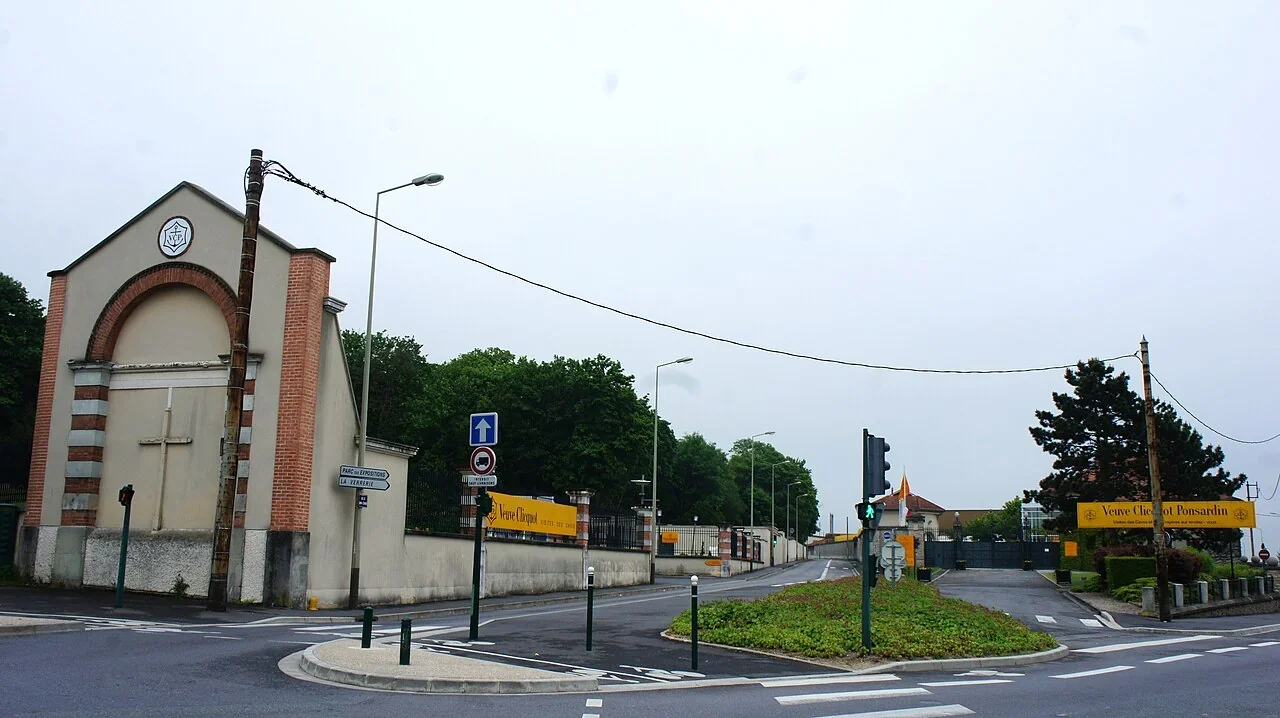
At 1 rue Albert Thomas in Reims, the Clicquot Café opened in March 2023 beside the cellar visitor operation. The present address combines the underground chalk-cellar route with a modern food-and-drink space, while its ticket programmes retain Madame Clicquot’s nineteenth-century innovations as named subjects.
Veuve Clicquot: the place and its story
The cellar calendar is unusually detailed: Tuesday–Sunday from 1 September to 1 November 2026, then Wednesday–Sunday from 4 November 2026 to 3 January 2027. The published exceptions include 25 December and 1 January. The visitor centre advertises 09:30–17:30; the time on a booked cellar ticket determines admission.
Brut Yellow Label, the birth of a style is a one-hour cellar introduction ending with Yellow Label. The official product caps groups at nineteen and lists French and English. The Rosé experience is a different one-hour route for eight people: an olfactory workshop and cellar visit finish with Brut Rosé and Vintage Rosé Brut 2015.
Only One Quality, the Finest compares four 6cl pours: Yellow Label, Extra Brut Extra Old, Vintage Brut 2015 and Vintage Rosé 2015. It lasts ninety minutes, costs €80 and takes groups of up to nineteen. Its content specifically follows Champagne production and the house’s Pinot Noir-led style.
The Art of Aging is two hours, €160, for up to twelve people. Its listed tasting is Vintage Brut 2015, Vintage Rosé 2015, Cave Privée 1998 and Cave Privée 1995 with cheeses. The product includes an aromatic garden and cellar discovery, and is not available to children.
La Grande Dame is a four-hour €260 programme connecting the Reims crayères with the house’s vineyards at Verzy. The three named wines are Yellow Label, La Grande Dame and La Grande Dame Rosé. Children are not admitted, and the house states that this experience is unavailable in November, December and early spring because of weather.
The rosé programme’s historical focus is Madame Clicquot’s creation of blended rosé in 1818. That method is distinct from the Pinot Noir maceration used at some other houses. The cellar visit links the documented story to the two named rosé wines, with French and English sessions on the house’s own calendar.

Visits and tastings
| Experience | Duration | Adult price from | Tasting | Languages | Booking |
|---|---|---|---|---|---|
| Brut Yellow Label, the birth of a style | 60 minutes | €36 (checked October 2026) | Brut Yellow Label | French, English | Official booking |
| The art of blended rosé champagne | 60 minutes | €60 (checked October 2026) | Brut Rosé and Vintage Rosé Brut 2015 | French, English | Official booking |
| One Quality, The Finest | 90 minutes | €80 (checked October 2026) | Brut Yellow Label, Extra Brut Extra Old, Vintage Brut2015, Vintage Rosé2015 (6cl each) | French, English | Official booking |
| The art of aging | 120 minutes | €160 (checked October 2026) | Vintage Brut2015, Vintage Rosé2015, Cave Privée1998, Cave Privée1995 with cheeses | French, English | Official booking |
| La Grande Dame, the Maison’s showcase of excellence | 240 minutes | €260 (checked October 2026) | Brut Yellow Label, La Grande Dame and La Grande Dame Rosé | French, English | Official booking |
The wines behind the different tickets
Yellow Label is assembled from fifty to sixty crus. The current product page gives a typical composition of 50% Pinot Noir, 30% Chardonnay and 20% Meunier, with the accompanying FAQ allowing harvest-dependent ranges around those figures. Up to forty-five per cent reserve wines can enter the blend. The house describes a collection of four hundred reserve wines, some up to thirty years old. Its published dosage is 9g/L, and the recommended serving temperature is 8–10°C.
The Yellow Label product page recommends this cuvée with radish, shrimp and grapefruit salad, vegetable wok dishes and a burger with caramelised onions and cheddar. These published pairings broaden the context for the single-wine cellar ticket, which includes Yellow Label alone. Meals, the Clicquot Café and the multi-wine experiences have their own menus or booking descriptions. The one-hour ticket’s specified tasting does not include the food shown in the house’s wine-pairing photographs.
Brut Rosé uses fruit from fifty to sixty crus and up to forty-five per cent reserve wines. Its base follows the Yellow Label blend, with Pinot Noir red wine added for colour and flavour. That process continues the blended-rosé approach associated with Madame Clicquot in 1818. The Rosé Assemblage visitor route compares Brut Rosé with Vintage Rosé 2015, so its two named pours show both a non-vintage rosé and a wine tied to a particular harvest.
Extra Brut Extra Old illustrates the importance of the reserve collection through individually numbered editions. The first edition, launched in 2017, combined six named origins and years: Cramant 1988, Aube 1996, Verzy 2006, Villers-Marmery 2008, Aÿ 2009 and Ville-Dommange 2010. It spent at least three years in vat and another three in bottle. The published blend was 50% Pinot Noir, 30% Chardonnay and 20% Meunier, with a dosage of 3g/L.
The fifth Extra Brut Extra Old edition combines seven reserve years: 1996, 2008, 2010, 2012, 2013, 2014 and 2015. Its wines first mature on fine lees in vats and then spend at least three years in bottle before disgorgement. This edition retains a 50% Pinot Noir, 30% Chardonnay and 20% Meunier blend and a 3g/L dosage. The Only One Quality ticket names Extra Brut Extra Old without fixing an edition number; the edition on the bottle identifies its precise reserve-year composition.
Its blend contains 90% Pinot Noir and 10% Chardonnay, with a 6g/L dosage. Didier Mariotti is the cellar master named on its current page. The house recommends serving it at 10–12°C and suggests scallop carpaccio or lemon linguine with shellfish. A standard Yellow Label cellar ticket does not include La Grande Dame; the four-hour vineyard programme lists the prestige cuvée among its three wines.
La Grande Dame Rosé 2018 uses the same 90% Pinot Noir and 10% Chardonnay framework, with thirteen per cent red wine from Clos Colin in Bouzy. The dosage is 6g/L and the recommended serving range is 10–12°C. Clos Colin’s red Pinot Noir is the named vineyard component that gives this rosé its colour and additional structure. The published food suggestions include bluefin tuna, salmon, duck à l’orange and veal with sweet-spiced vegetables.
RICH has a separate sweet-wine specification: 50% Pinot Noir, 30% Meunier, 20% Chardonnay and forty to forty-five per cent reserve wines, drawn from fifty to sixty crus. Its dosage is 55g/L. Veuve Clicquot designed this cuvée for service over ice or very chilled at about 4°C, and suggests mango, pineapple or vegetable curry as accompaniments. RICH is a distinct bottle in the range; none of the cellar tickets listed above names it as an included pour.
Demi-Sec combines 50% Pinot Noir, 30% Meunier and 20% Chardonnay, with up to forty-five per cent reserve wines. Three years in the crayères precede release, and its dosage is 45g/L. The house recommends service at 8–10°C and pairs older bottles with Paris-Brest, tarte Tatin or pears with caramel. Its specification identifies fifty crus. Demi-Sec belongs to the sweeter side of the Clicquot range, alongside RICH; it is not included in the named cellar-ticket pours above.
Access and facilities
The Reims visit centre is at 1 rue Albert Thomas, beside the Saint-Nicaise cellar district. Its permanent Café Clicquot opened in March 2023. The house quotes a 30-minute walk from the city centre and provides twenty car spaces, five coach spaces and bicycle parking.
Official information
Plan nearby visits
Build your visit into a fuller stay with our Reims guide, compare tours and packages and find somewhere comfortable to stay.
Plan your trip to Reims
Get there
Book a tour
Select the departure point and date on the booking page. Check the meeting point, language and inclusions before paying.
Compare toursWe may earn a commission if you book through these links, at no extra cost to you.