Before you go
A cellar tasting is a chance to connect the production story with the glass in front of you. Begin with what you notice, then ask the guide how the blend, maturation and final preparation might explain it. Everyday words are enough to describe your first impressions.
The steps below offer a simple order: look, smell and taste, then compare. Keep a short note for each wine and separate the name printed on the bottle from your own description. The introduction to champagne explains the production sequence; the glossary supplies definitions when a technical term comes up.
Temperature and glass
Perrier-Jouët and the Comité Champagne recommend serving at 8–10°C. Hold the glass by its stem so your hand does not warm the bowl. A tulip-shaped glass has room for aromas with a narrower opening above them. At a house visit, use the glass provided and follow the guide’s pouring sequence.
At home, start with clean glasses free of detergent smells. Do not put a scented candle, strong flowers or a perfume sample beside the tasting. Those competing aromas can make it harder to describe the wine itself. Keep the bottle label available so you can match each note to the correct cuvée afterwards.
Give yourself time between wines. Water and the option to spit make a comparison easier to pace. You can leave a pour unfinished, and you can ask about a non-drinking format before booking. The designated driver should avoid alcohol; tasting is never a reason to compromise the transport plan.

Look: colour and bubbles
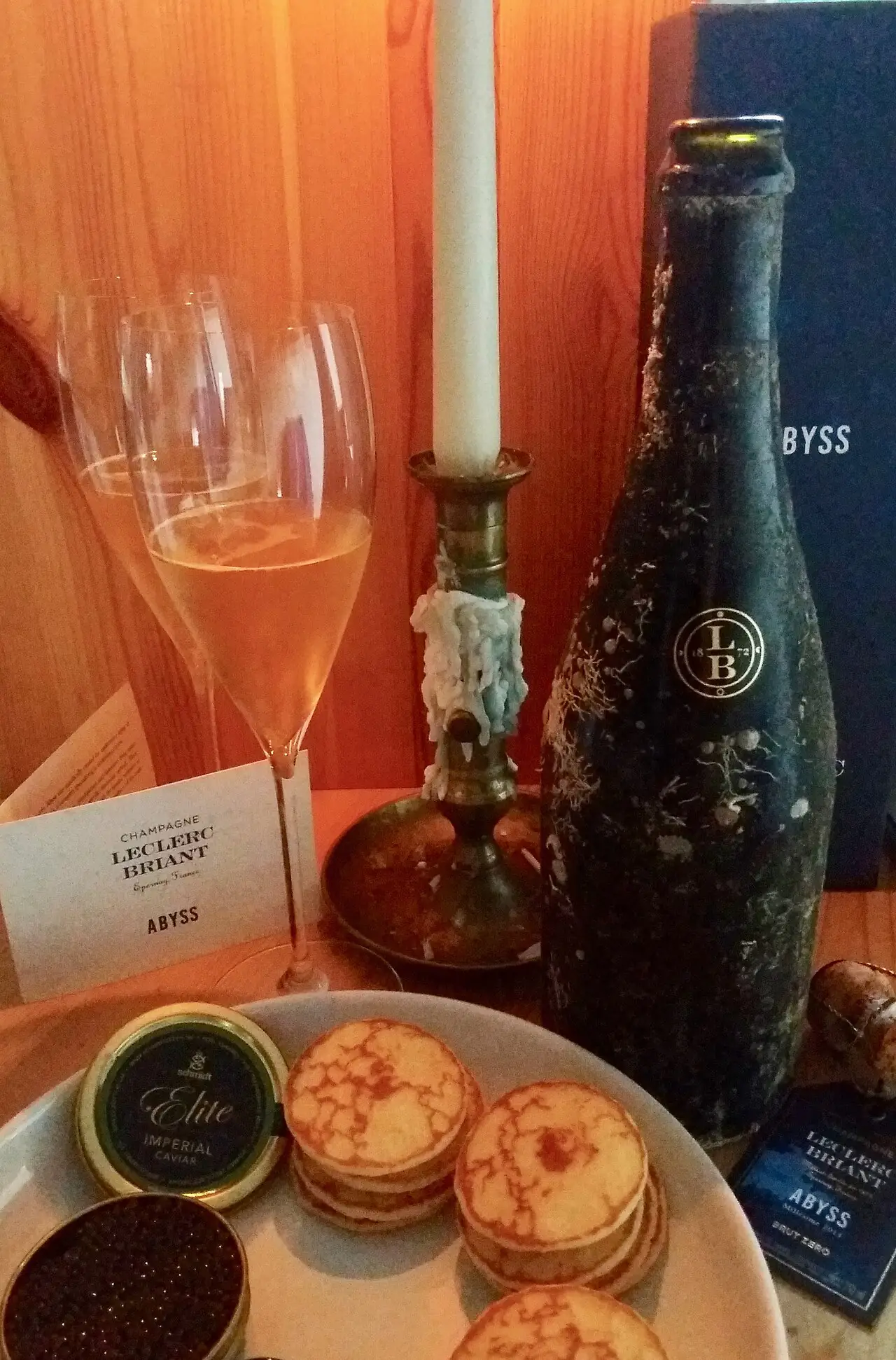
Hold the glass against a plain, light background and describe the colour in ordinary language. Does it look pale, golden or pink? Record that observation before reading someone else’s tasting note. A deeper colour alone does not tell you the price, quality or exact age of the wine.
Watch the bubbles without turning their appearance into a competition. Glass shape, cleanliness and the way a wine is poured affect what you see. Compare the two glasses supplied under the same conditions and ask the host what they intended the comparison to demonstrate.
Keep the visual note brief: a few words are enough. The aim is to remember the sequence when the second or third wine arrives, without trying to identify a bottle by sight. If a rosé is included, ask how that particular house made it instead of assuming every pink champagne follows the same method.
Smell: begin with familiar things
Bring the glass to your nose and take a gentle sniff. Write down a familiar association: citrus, apple, flowers, bread or something else you recognise. An association is a description of your impression, and does not mean the producer added that ingredient.
Return to the glass after the guide speaks. You may find the description changes as the wine warms slightly or as you understand the comparison. Describe the first impression and the later one separately. It is fine to say that an aroma is hard to name, or that you notice texture more clearly than scent.
When tasting with someone else, make your own first note before discussing theirs. Ask the guide an open question such as “What should we compare between these two wines?” This invites an explanation of the house’s intention without requiring you to reproduce a prescribed list of aromas.

Taste: texture, freshness and the blend
Take a small sip and consider the sensation before searching for a fruit name. Notice freshness, the feel of the bubbles and how long the flavour remains after the sip. Compare those impressions with the smell. A simple note such as “fresh opening, softer finish” is more useful than a long phrase you will not understand later.
Perrier-Jouët describes Chardonnay as bringing freshness, Pinot Noir structure and Meunier generosity. These are helpful starting points for discussing a blend, and cannot identify grape percentages by taste. Ask which grapes are in the particular wine and why the house chose them.
A Ruinart visit or a Taittinger appointment can provide a house-specific context for that conversation. The house-or-grower guide explains different visitor formats. Choose the programme whose tasting selection interests you, since different tickets at one producer can include different wines.
Dosage styles
The sweetness term on the label describes a regulated sugar category. Brut is under 12 g/L, extra dry is 12–17 g/L and demi-sec is 32–50 g/L. Read the category with the actual wine’s technical details: dosage is one part of the finished balance, and a category alone cannot tell you whether you will enjoy the wine. “Extra dry” belongs above brut in the sugar ranges below, despite how the words might sound in everyday English.
| Label | Sugar |
|---|---|
| Brut nature | Under 3 g/L; no sugar added after secondary fermentation |
| Extra brut | 0–6 g/L |
| Brut | Under 12 g/L |
| Extra dry | 12–17 g/L |
| Sec | 17–32 g/L |
| Demi-sec | 32–50 g/L |
| Doux | Over 50 g/L |
During a tasting, ask for the wine’s own sugar figure and compare it with the category. The intervals overlap at some boundaries; do not use this table as a blind-tasting scorecard. Record the label wording exactly, particularly when it forms part of a cuvée name.
Non-vintage, vintage and prestige cuvées
Non-vintage champagne has a minimum maturation of 15 months, including at least 12 months on lees. Vintage champagne has a minimum of three years. These are legal minima, and a house may mature a wine longer. Ask how long the particular bottle matured; its actual age can exceed that minimum.
A vintage identifies a harvest year. A non-vintage blend can bring together wines from more than one year. Neither description makes a personal preference compulsory: compare the house’s examples and ask what the winemaker wanted each to express.
A prestige cuvée is a producer’s particular selection, not a single shared recipe across every house. Ask which grapes, parcels, years or maturation choices distinguish it from the other wine in the tasting. Keep the full product name beside your note so you can find the same bottle later.
Questions to ask on a tour
Choose two or three questions that connect to what you have just seen: which grapes are used here; how long did this wine remain on lees; what differs between the two wines; and what serving advice does the house give for this bottle? A specific question about the poured wine often gets a more useful answer than asking for the producer’s “best” champagne.
Before buying, ask whether the bottle in the shop is the same cuvée and format as the tasting sample. Ask about storing it at home and the producer’s suggested drinking window. Note the answer: further ageing is a decision about that bottle.
To arrange a tasting, compare the published house programmes and guided tours. A cellar visit, a tasting-only appointment and a multi-stop day have different inclusions. The programme’s wine list, meeting point and language belong in the booking decision.
Practise at home before you go
Use a bottle you already intended to open and share the exercise with another adult who wants to join in. Start with a clean glass, a light background and a short note headed look, smell and taste. Record the label, serving temperature and your own observations before reading the producer’s description.
If you compare two wines, pour small samples and keep the order clear. Ask each person which difference they noticed most, before discussing a preference. Compare your notes with the producer’s explanation afterwards. You may discover that the practical question you want to take to Champagne concerns glassware, a blend or a tasting format.
Plan the cellar day around the appointment and the journey, with meals and non-alcoholic breaks between visits. A first Reims weekend leaves space for the city as well as the wines. The exercise is preparation for a conversation, not an examination you need to pass.
FAQ
Do I need to know wine terminology?
No. Describe what you notice in familiar words and ask the guide to explain the house’s choices. Keep the wine’s exact name beside your note.
What temperature should champagne be served at?
The house and Comité Champagne references recommend 8–10°C. Hold the glass by its stem and use the host’s glass at an organised tasting.
Does extra dry mean drier than brut?
No. Extra dry is the 12–17 g/L category, while brut is under 12 g/L. Use the glossary table and the producer’s own technical information.
Can I spit or leave wine unfinished?
Yes: you can choose not to finish a pour. Ask about spitting facilities and non-drinking options when booking. The designated driver should avoid alcohol.
Is a vintage automatically better?
Vintage describes a harvest year. Compare the particular wines and the house’s explanation and form your own preference.
Plan your trip to Champagne
Get there
Book a tour
Select the departure point and date on the booking page. Check the meeting point, language and inclusions before paying.
From: Reims. Duration: Approximately7 hours. Group size: Maximum 8 participants. Includes: Guide and air-conditioned transfer; E-bike and helmet; Le Clos Corbier visit and lunch; Four wines:two Champagnes,one red wine,one Ratafia. Select Reims pickup option only. Listing checked October 2026.